For any business that gets, labels, or sells packaged products in India, the Plastic Waste Management Rules are not just something in the background anymore. They are now something you need to follow carefully. Since 2016, these rules have been changed many times to make Extended Producer Responsibility (EPR) stricter, set clearer rules on how thick plastic can be, and improve how you can track where plastic comes from. Each time the rules have changed, it has added more paperwork for companies that make, import, or brand products. This guide explains exactly what the current Plastic Waste Management Rules require, so packaging buyers can check their own compliance before an inspector comes to check it for them.
Understanding the Plastic Waste Management Rules and EPR Framework
The Plastic Waste Management Rules were first introduced in 2016 with one main idea: the person who puts plastic packaging on the market is responsible for what happens to it after it’s used.This is called Extended Producer Responsibility, and it applies to Producers, Importers, and Brand Owners, who are usually referred to as PIBOs under these rules. Since 2016, there have been over ten changes to these rules.
These changes have added more responsibilities, such as the 2018 expansion of EPR to include more groups, the 2021 phased ban on certain single-use plastics, and the 2022 change that made EPR registration and environmental compensation required instead of optional.Each change has made the Plastic Waste Management Rules move from being voluntary to being based on verification. For someone who buys packaging, this history is important because it shows why following the rules is becoming more detailed. What was once a one-time registration is now an ongoing process that requires regular reporting based on the actual amount of packaging used, the recycled content in it, and data on where it comes from.
EPR Registration: What Producers, Importers, and Brand Owners Must Do
Every company that puts plastic packaging into the Indian market must register on the Central Pollution Control Board’s EPR portal. To register, they have to say how much packaging they use each year, broken down by type. This information becomes the starting point for checking how well they meet their recycling and processing goals every year. Companies can’t just say they’re following the rules on paper anymore. Under the Plastic Waste Management Rules, EPR certificates act like proof that plastic waste is being properly collected or processed.
This means every piece of plastic a company puts into the market must be matched by a record showing that it’s been collected or processed somewhere else in the supply chain. This change affects how procurement teams work. If a buyer is getting carry bags, courier bags, or food packaging from another company, they need to check whether that supplier is properly registered for EPR. If there are gaps in the supplier’s EPR process, it could lead to problems when audits compare the actual amount of packaging used with the EPR certificates.
Thickness Norms and Restricted Plastic Items Businesses Must Track
The Plastic Waste Management Rules set a minimum thickness for plastic carry bags, which has increased over time to 120 microns.This is meant to discourage the use of thin, single-use bags that are hard to collect and recycle.Retailers and manufacturers who continue to sell carry bags that are thinner than this limit are not following the current rules, no matter how long they have been using a particular supplier. In addition to thickness, the Rules also list certain single-use plastic items that are banned completely.
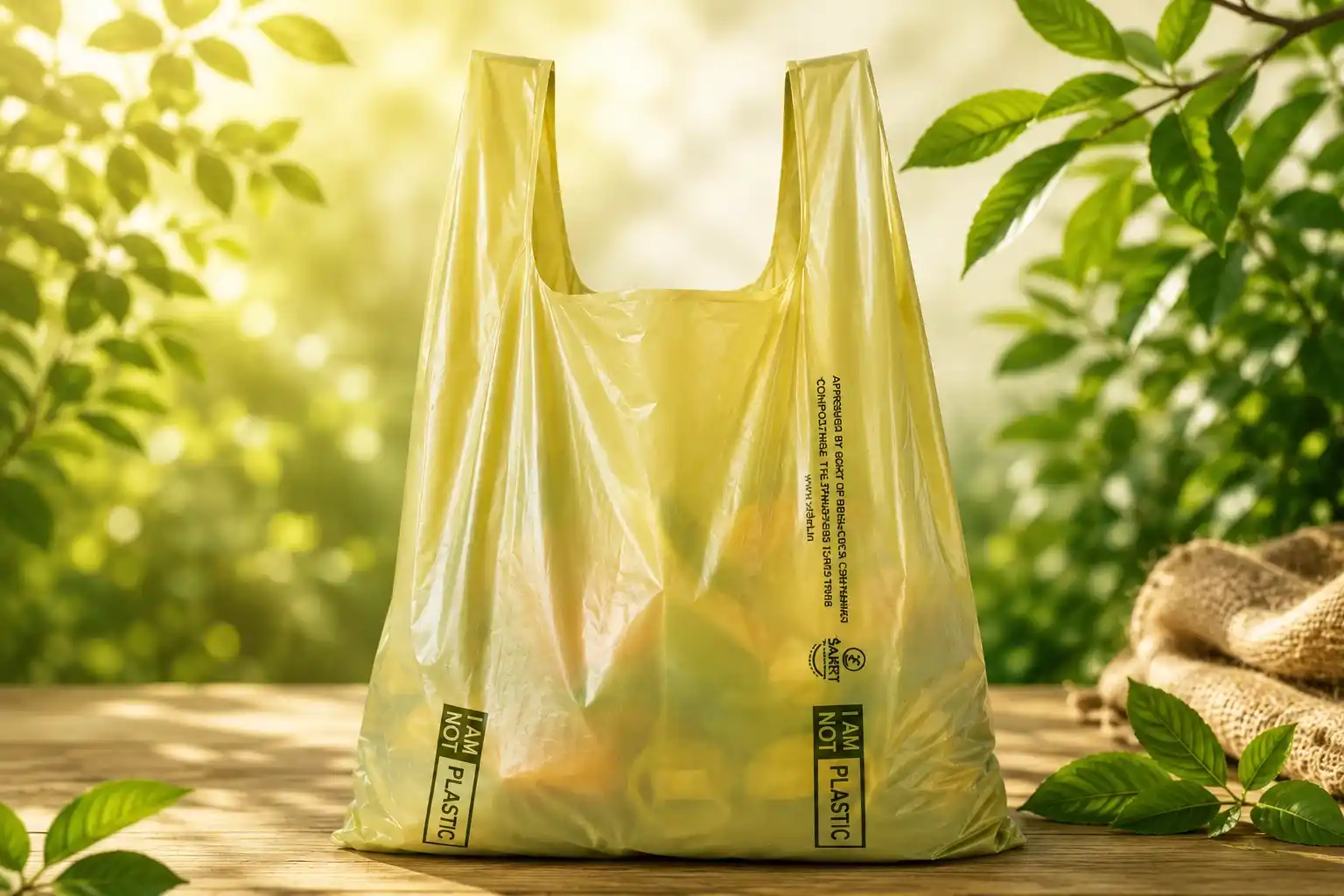
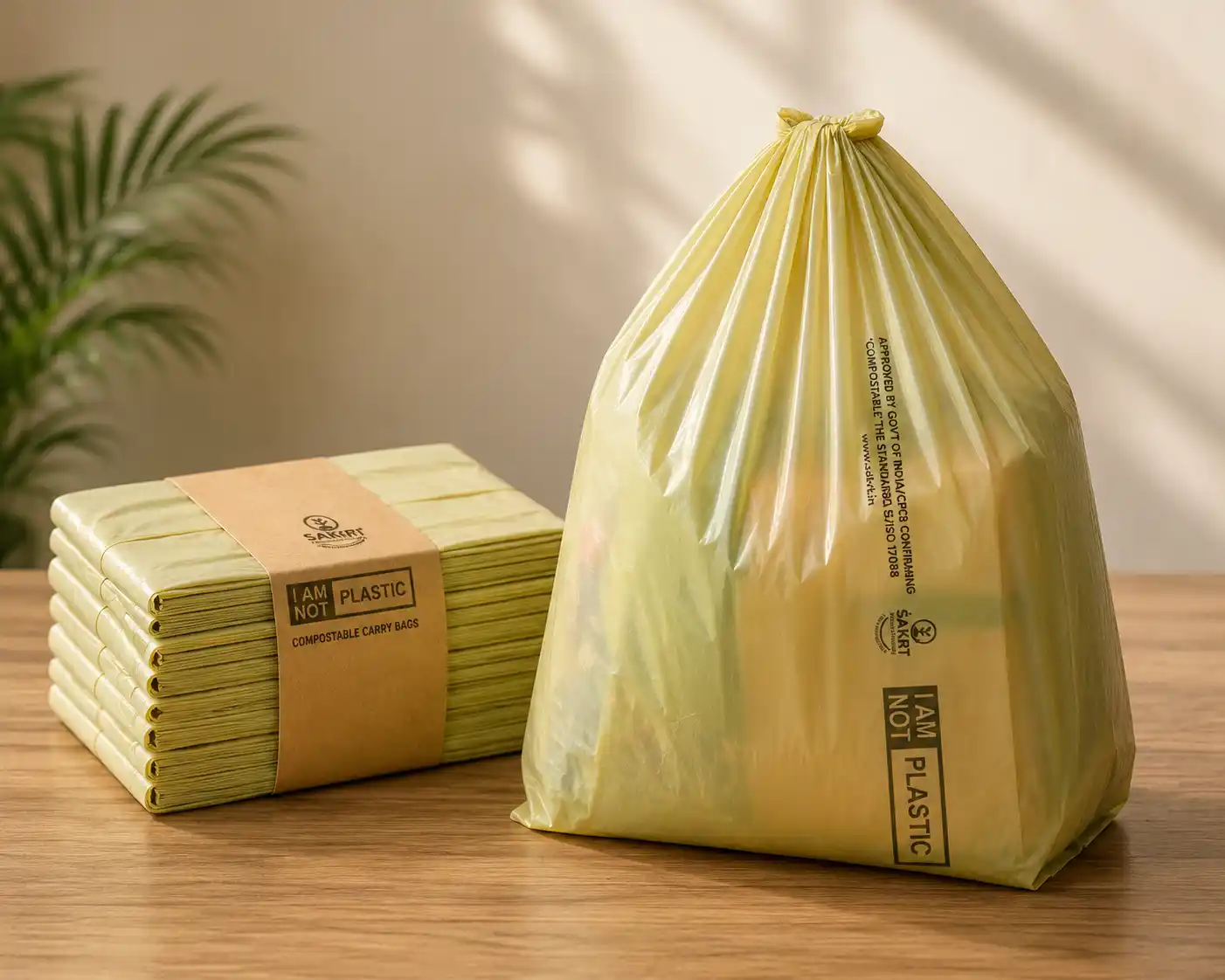
These include things like cutlery, straws, and some types of packaging films.Businesses in the food service and retail packaging industries should regularly check this list because new items are often added to it, not removed. For B2B buyers, the key point is that thickness and material details should be included in supplier contracts, not just product descriptions. Choosing a compostable or IS 17088-certified alternative helps avoid both the thickness requirements and the single-use restrictions. This is why there has been an increase in demand for certified compostable carry bags and courier bags in retail and e-commerce sectors.
QR Code and Barcode Traceability: The New Verification Layer
Starting in January 2025, new rules for managing plastic waste require all plastic packaging to have a QR code, barcode, or other unique mark that connects it back to the company that made it. This change switches the way rules are followed from a system where companies just say they follow the rules on paper to one where regulators can check everything digitally anytime along the supply chain. In real use, this means purchasing teams can’t just assume a supplier is using recycled or compliant plastic just because they say so.
The packaging itself must have a clear way to track where it came from, and buyers are expected to make sure their suppliers provide packaging that meets this standard. This is because the records they keep now need to match the information found in the tracking data. Compostable packaging isn’t free from needing documentation, but it doesn’t have to follow the same tracking rules as regular plastic because it isn’t considered plastic waste that needs to be collected and recycled through the EPR system. For brands managing complicated supply chains, this is a useful and simpler change.
Penalties and Why Compostable Packaging Reduces Compliance Risk
Not following the Plastic Waste Management Rules can lead to serious financial consequences. Fines for breaking the rules can be as high as fifteen lakh rupees per violation, and if a company keeps breaking the rules, they might face daily fines. Repeat offenders could also lose their permits. Now that enforcement is linked to digital tracking and matching EPR certificates, the responsibility for compliance falls more heavily on companies that still use traditional plastic packaging.
Every plastic bag, pouch, or courier envelope a company uses increases its reported plastic volume and the amount of plastic waste it must manage. Using packaging that is certified under IS 17088 as compostable takes that type of packaging out of the plastic EPR calculation completely. For companies that deal with large volumes of carry bags, courier bags, or food packaging, this isn’t just about being more sustainable it’s also a way to lower ongoing legal risks.
SAKRT – A Brand of Envirly Innovations Pvt Ltd
Choose SAKRT’s Biodegradable Products
Join the sustainability revolution today!
Choose SAKRT’s biodegradable products for your home, business, or event and make waste disposal responsible.
FAQs
They are a group of rules that were first announced in 2016 and have been changed a few times since. These rules require the people who make, bring in, or own brands to take care of collecting, recycling, and properly getting rid of the plastic packaging they put into the market.
Any producer, importer, or brand owner who puts plastic packaging into the Indian market has to sign up on the CPCB’s central EPR portal and report their yearly packaging amounts.
According to the current rules for managing plastic waste, carry bags made of plastic need to be at least 120 microns thick. If they are thinner than that, they are not allowed.
Certified compostable packaging, like materials that meet IS 17088 standards, is not considered plastic waste, so it isn’t included in the plastic EPR framework. This makes it easier for companies that switch to this type of packaging to comply with regulations.
If someone doesn’t follow the rules, they might have to pay a fine that could be between ten thousand and fifteen lakh rupees for each mistake. They might also get charged every day they keep breaking the rules, and their permit could be taken away if they don’t fix the problem.