
For decades, the fashion and apparel industry has relied on traditional clear plastic poly bags to protect clothing during shipping and storage. While these compostable poly bags for garments are cheap and transparent, they come at a massive environmental cost taking hundreds of years to break down and shedding toxic microplastics into our ecosystems.
Today, conscious consumers and strict government regulations are forcing fashion brands to rethink their packaging. The solution? Compostable poly bags for garments.
In this guide, we will explore why making the switch to plant-based garment bags is the smartest move for your apparel brand, and how to choose the right sustainable packaging partner.
Why Traditional Poly Bags Are Hurting Your Brand
Before diving into the alternatives, it is crucial to understand the liability of traditional plastic garment bags.
1. The Microplastic Crisis
2. Changing Government Regulations
Across India and globally, governments are banning single-use plastics. Relying on traditional polyethylene garment covers puts your supply chain at risk of sudden compliance issues and fines.
What Are Compostable Poly Bags for Garments?
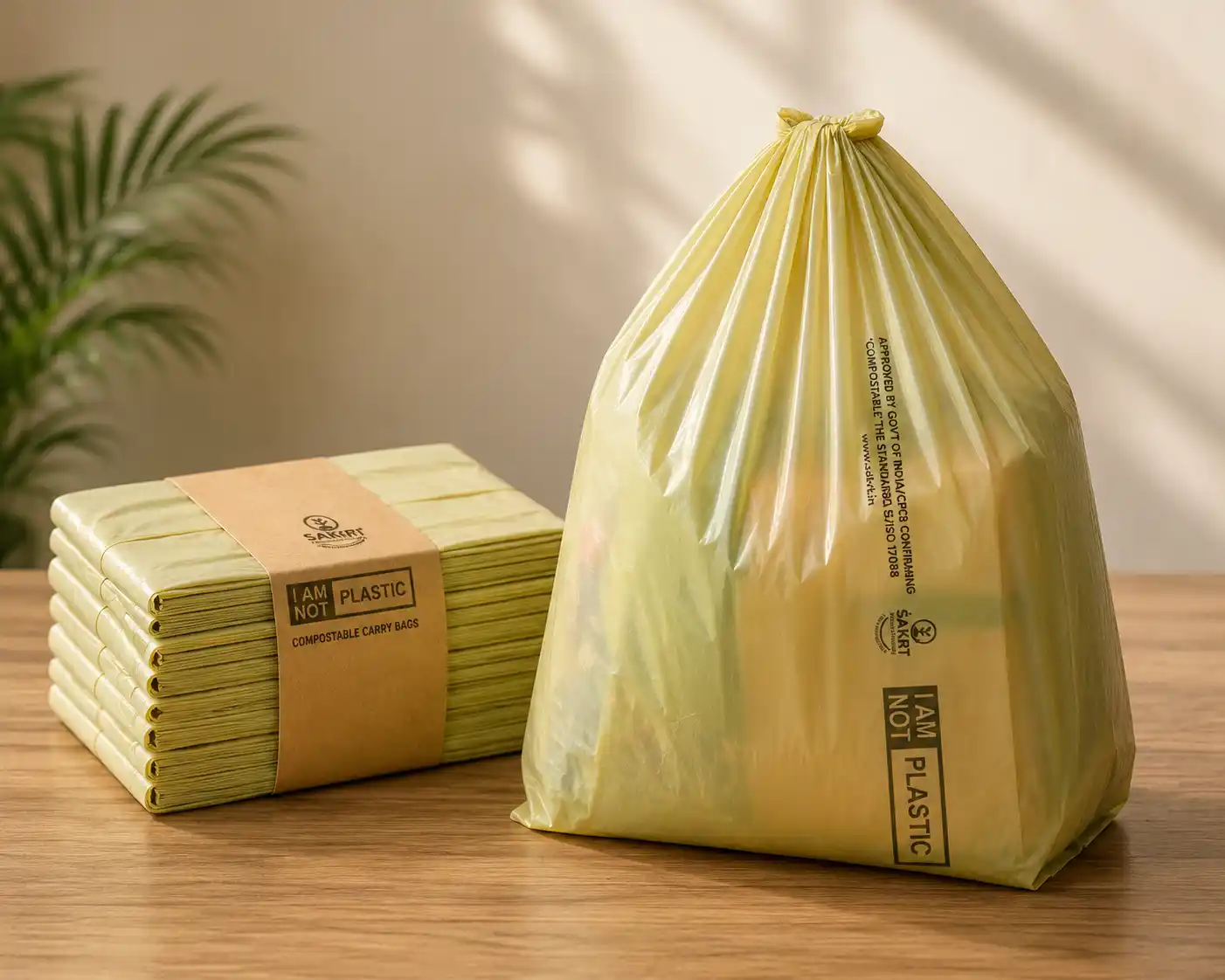
Compostable garment bags offer the exact same protection, transparency, and durability as traditional plastic bags, but with zero environmental guilt.
Instead of petroleum, these eco-friendly bags are manufactured using renewable, plant-based materials like cornstarch, sugarcane, and Polylactic Acid (PLA).
How Do They Work?
When disposed of in a proper composting environment, these bags do not break down into microplastics. Instead, naturally occurring microorganisms consume the material, turning it into water, carbon dioxide, and nutrient-rich organic biomass within 90 to 180 days.
Key Benefits of Switching to SAKRT Garment Bags
If you run a fashion boutique, a laundry service, or an e-commerce clothing brand, protecting your textiles from moisture, dust, and transit damage is non-negotiable. Here is why SAKRT’s compostable garment bags are the ultimate upgrade for your business.
100% Plastic-Free and CPCB Certified
SAKRT garment bags are tested and approved by CIPET and strictly adhere to CPCB (Central Pollution Control Board) guidelines. This guarantees that your packaging is legally compliant and genuinely sustainable.
Uncompromised Durability and Clarity
Many brands worry that eco-friendly packaging will easily rip or look cloudy.
Tear Resistance
Our plant-based polymer blends offer high tensile strength, ensuring your heavy denim or delicate silks are securely held without the bag tearing during transit.
Transparent Design
Retailers need to see the product without opening the bag. SAKRT bags offer excellent transparency for easy barcode scanning and inventory identification.
Enhanced Brand Reputation
Modern consumers love unboxing experiences that align with their values. Printing your logo on a certified compostable bag instantly communicates that your brand cares about the planet, building deep customer loyalty.
How to Choose the Best Eco-Friendly Garment Bags
Not all “green” packaging is created equal. When sourcing sustainable poly bags for your garments, always look for the following:
Avoid "Oxo-Degradable" Plastics
Never buy bags labeled as “oxo-degradable.” These are just standard plastics mixed with chemical additives that make them shatter into microplastics faster. They are highly toxic to the environment.
Demand Real Certifications
Always ask your manufacturer for proof of certification. Authentic compostable bags should meet stringent testing standards (like IS 17088 or ASTM D6400) proving they leave no toxic residue behind.
Make the Sustainable Switch Today
Your clothing deserves packaging that protects both the fabric and the future of our planet. By replacing traditional plastics with plant-based alternatives, you take a massive step toward a circular, zero-waste economy.
SAKRT – A Brand of Envirly Innovations Pvt Ltd
Choose SAKRT’s Biodegradable Products
Join the sustainability revolution today!
Choose SAKRT’s biodegradable products for your home, business, or event and make waste disposal responsible.