Every online order ends the same way: a courier bag lands on someone’s doorstep. It’s easy to overlook this small, flexible pouch as an afterthought in the logistics chain, but for e-commerce sellers today, it has become one of the most scrutinised parts of the business. Between tightening plastic regulations, rising shipping costs, and customers who now judge a brand by what shows up at their door, courier bags have quietly moved from a packing-room detail to a business-critical decision.
The E-commerce Boom Is Driving a Packaging Crisis
India’s e-commerce packaging market is projected to grow from roughly USD 4.22 billion in 2026 to USD 7.59 billion by 2031, and some industry estimates put that growth curve even steeper. Every one of those additional orders needs an outer layer, and for most direct-to-consumer brands and marketplace sellers, that outer layer is a courier bag rather than a box. As quick-commerce shortens delivery windows and order volumes climb month over month, the demand for lightweight, right-sized, compliant packaging is scaling faster than many sellers have planned for.
This growth isn’t limited to India. The global e-commerce packaging market was valued at over USD 106 billion in 2025 and is expected to nearly quadruple by 2033. Asia Pacific alone accounts for more than half of that global market. For sellers, this means the courier bag is no longer a minor line item it’s a recurring, scaling cost and compliance decision that touches every single shipment a business sends out.
Quick-commerce has added its own pressure on top of this. Micro-fulfilment hubs favour lightweight, flexible formats that move fast and don’t add unnecessary bulk, which is pushing more categories not just apparel toward courier bags instead of boxes. That shift makes the choice of bag material and specification a decision that scales with the business rather than a one-time packaging supplier conversation.
Plastic Courier Bags Are Running Into a Legal Wall
India’s Plastic Waste Management Rules have steadily tightened the thickness threshold for plastic carry bags, banning anything under 75 microns from 2021 and under 120 microns from December 2022. Most standard LDPE poly mailers used across e-commerce fall below this line, which puts sellers who still rely on them in a legally uncomfortable position. On top of the thickness rules, plastic bags and multilayered packaging have needed a traceable barcode or QR code since July 2025.
Extended Producer Responsibility (EPR) adds another layer of obligation. Producers, importers, and brand owners are required to register on the CPCB portal and meet defined collection and recycling targets, with penalties for non-compliance running up to ₹1 lakh in fines or even imprisonment. For a growing D2C brand shipping thousands of parcels a month, this isn’t a hypothetical regulatory risk it’s an operational requirement that needs to be built into packaging sourcing decisions.
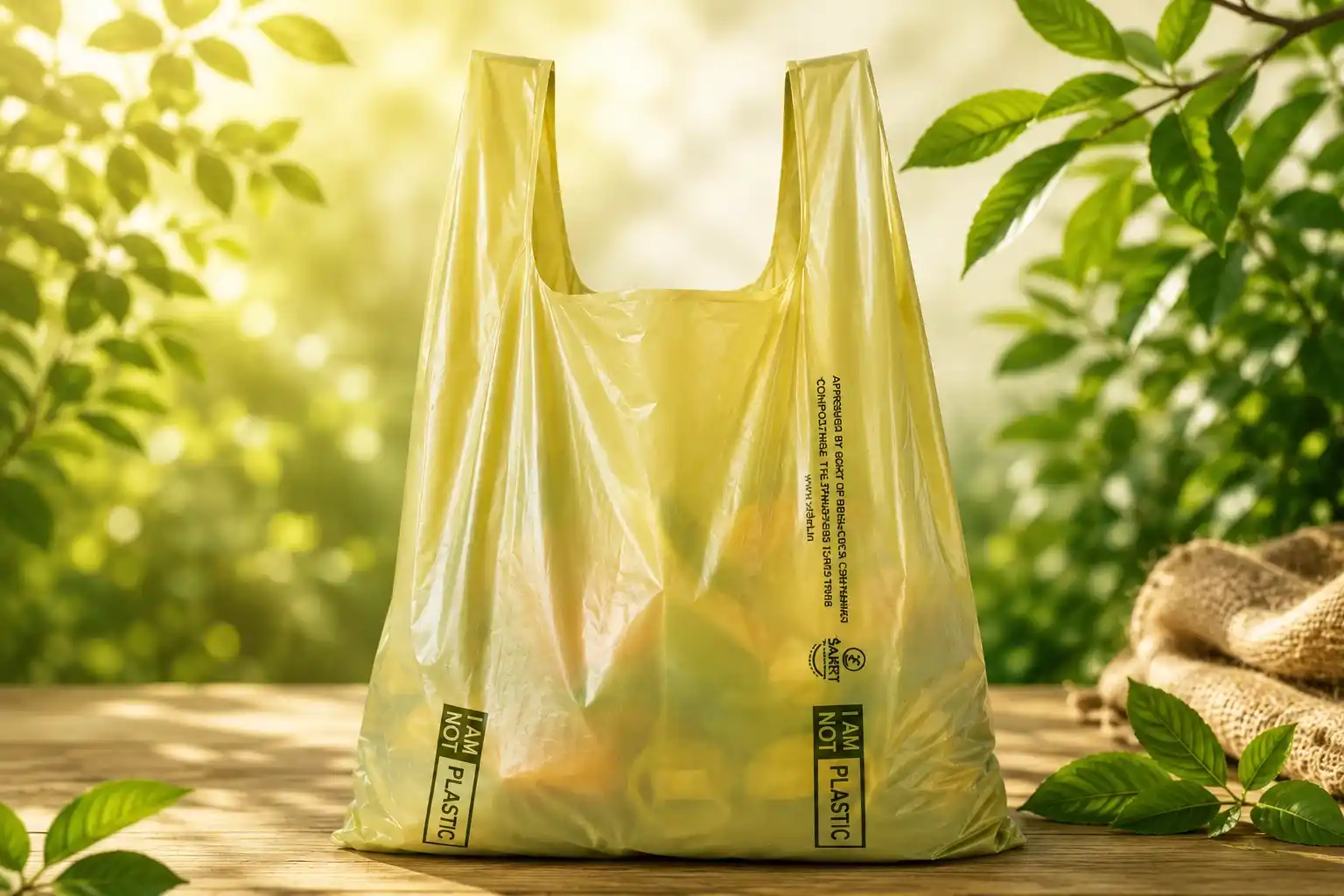
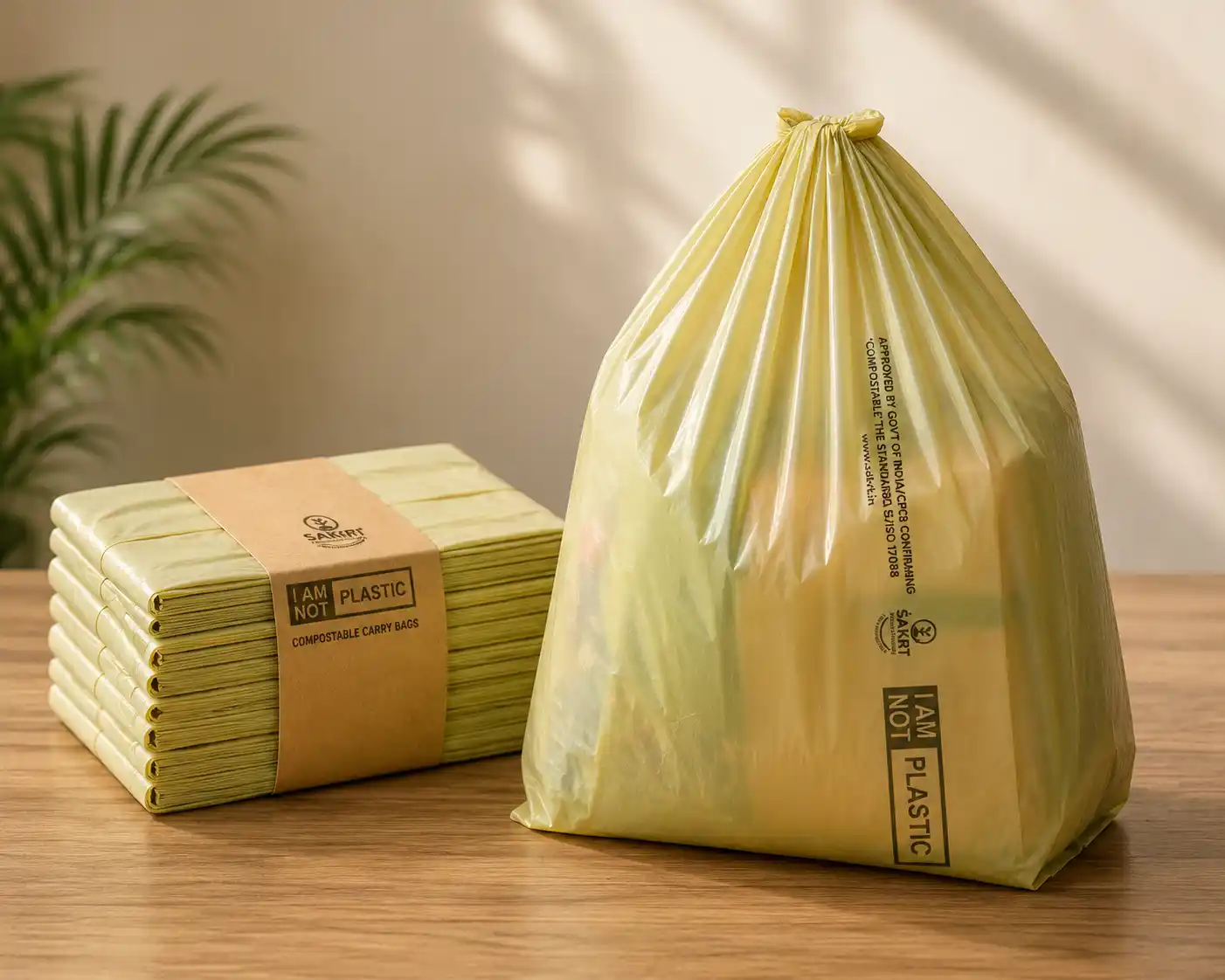
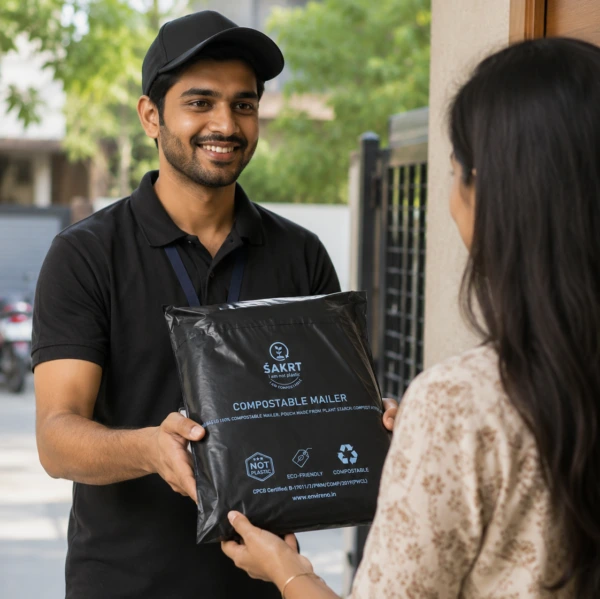
This is where certified compostable courier bags earn their place. Bags certified to IS 17088 or EN 13432 standards are recognised as legitimate, compliant alternatives to conventional poly mailers, built from materials that behave like plastic in terms of tear resistance and sealing but don’t carry the same regulatory exposure. For many sellers, switching the material of the courier bag is a far simpler fix than overhauling packaging formats entirely.
What Arrives at the Door Shapes What Customers Think of the Brand
For an online-only brand, the courier bag is often the only physical object a customer ever holds that represents the company. There’s no storefront, no in-person interaction just a package landing at the door. Three out of four consumers now say they’re willing to pay more for sustainable packaging, and that preference shows up directly in the numbers: the sustainable e-commerce packaging segment is growing faster than the broader packaging market, driven specifically by mailers and envelopes.
Returns complicate this picture further. Online shopping already generates close to five times more packaging waste per item than in-store retail, and returns push that number higher still, since e-commerce return rates can reach 40% compared to 5–10% for in-store purchases. In India specifically, cash-on-delivery orders see return-to-origin rates of 20–40%, meaning a meaningful share of courier bags are produced, shipped, and discarded without a sale ever completing.
Every one of those bags is a brand touchpoint, whether the order is kept or returned. A courier bag that tears, feels cheap, or is visibly non-recyclable works against the unboxing experience a brand is trying to build. Choosing a bag that reflects the brand’s values sturdy, well-printed, and genuinely compostable turns a purely functional item into part of the customer relationship.
Compostable Courier Bags Solve Compliance, Cost, and Trust Together
Because most Indian courier companies bill on volumetric weight, oversized packaging is a direct cost problem a box just 20% larger than necessary can raise shipping costs by 15–30%. Courier bags sidestep this by design: they’re lightweight, they conform to the product rather than adding empty air, and they avoid the volumetric penalty that rigid boxes often carry. This makes the format itself, not just the material, a real lever for controlling logistics costs at scale.
When that lightweight format is also made from certified compostable material, the same bag solves three problems at once. It meets the thickness and certification requirements under India’s plastic rules, it avoids the long-term landfill footprint that plastic poly mailers carry, and it gives sustainability-conscious customers a tangible reason to trust the brand a little more with every order.
Courier bags have stopped being a background packing-room decision and have become a compliance requirement, a cost variable, and a brand signal all wrapped into one shipment. As India’s e-commerce volumes keep climbing and enforcement of plastic rules keeps tightening, the sellers who move early to compostable courier bags won’t just be avoiding risk they’ll be building the kind of packaging experience that keeps customers coming back. If your business ships even a few hundred parcels a month, it’s worth asking whether your current courier bags would hold up to the same scrutiny your customers are already applying.
SAKRT – A Brand of Envirly Innovations Pvt Ltd
Choose SAKRT’s Biodegradable Products
Join the sustainability revolution today!
Choose SAKRT’s biodegradable products for your home, business, or event and make waste disposal responsible.
FAQs
How to tie up with a courier company for e-commerce?
Connecting your e-commerce business with a courier company can be done in two main ways: either by working directly with big logistics companies like Blue Dart, Delhivery, or DTDC, or by using shipping platforms like Shiprocket or NimbusPost, which let you use multiple courier services through a single platform.
What is a courier bag used for?
This type of bag has been used by many kinds of messengers to carry mail and goods, such as Pony Express riders, postal workers, foot messengers (especially in ancient times), and bicycle couriers.
Why is e-commerce packaging important?
Ecommerce packaging offers your brand another way to connect with customers in a tangible way.When done well, it makes the shopping experience better, reduces the chances of customers returning items, makes them feel valued and cared for, and helps your brand be more noticeable than others.
What is the future of paper bags?
Here’s a look at what’s ahead: Bio-Based Materials: Paper bags made from quickly renewable sources such as bamboo, agricultural waste, or seaweed fibers are becoming more popular.These materials provide a sustainable option compared to regular wood pulp, helping to reduce the environmental impact.
What are the different types of delivery bags?
Delivery bags are made for specific kinds of items you’re carrying.Some common types are insulated bags for keeping food hot or cold, flat bags for pizzas, tall bags for drinks, strong backpacks for bike messengers, and sealed bags that show if someone has opened them for sending packages.