As the world wakes up to the devastating effects of single-use plastics, businesses in the food and retail industries are actively searching for eco-friendly alternatives. Enter cornstarch packaging, a revolutionary, 100% plant-based solution that is rapidly replacing traditional plastic.
But what exactly is it, and is it truly as sustainable as it claims to be?
In this guide, we will break down what cornstarch packaging is made of, the fascinating process of how it’s manufactured, and why making the switch is one of the smartest decisions your business can make today.
What is Cornstarch Packaging Made Of?
Cornstarch packaging is exactly what it sounds like—packaging made from the starches found in corn plants. Specifically, it is created using Polylactic Acid (PLA), a type of bioplastic derived from fermented plant starch.
Unlike traditional plastics that are manufactured using petroleum (fossil fuels) and toxic chemicals, cornstarch packaging uses renewable agricultural crops. This means that not only is the sourcing of the material sustainable, but the end product is completely free of harmful microplastics and chemical toxins, making it highly safe for food packaging.
How is Cornstarch Packaging Made?
Step 1: Harvesting and Milling
Corn is harvested and then milled to separate the starch from the rest of the crop.
Step 2: Fermentation
The extracted cornstarch is mixed with enzymes or acids and heated. This process ferments the natural sugars (glucose) in the starch, turning it into lactic acid.
Step 3: Polymerization (Creating PLA)
The lactic acid undergoes a chemical process called polymerization. This links the molecules together to form Polylactic Acid (PLA) a bioplastic resin that looks and behaves incredibly similar to traditional plastic.
Step 4: Molding into Packaging
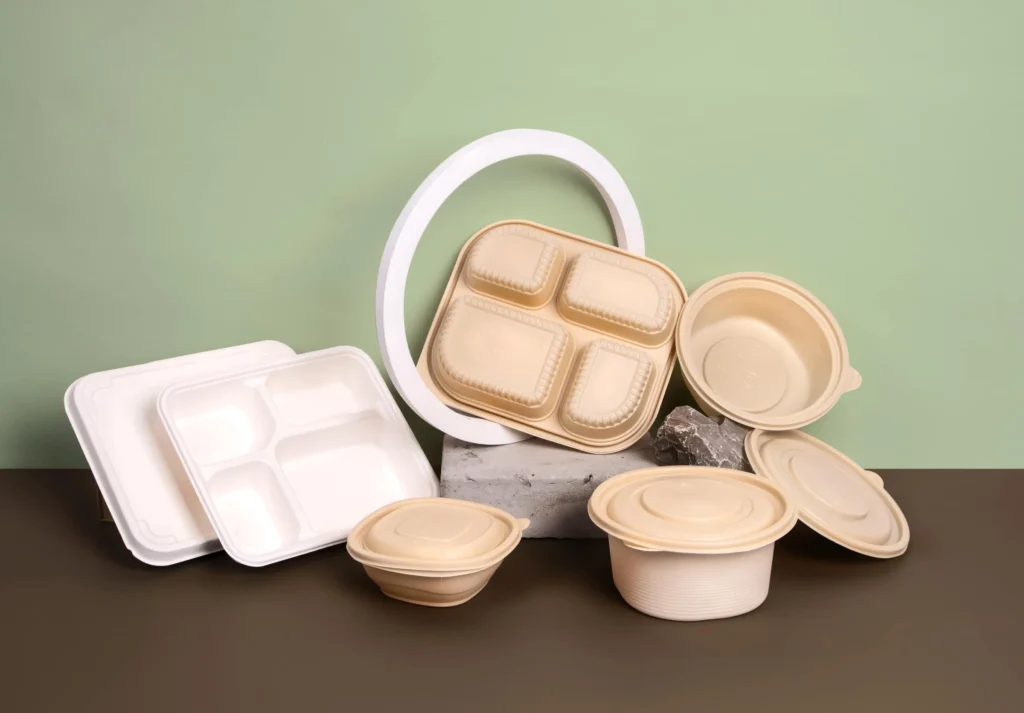
The PLA resin is melted and molded into various shapes. At SAKRT, this material is expertly crafted into 100% compostable carry bags, garbage liners, food compartment plates, and mailer bags.
Key Benefits of Cornstarch Food Packaging
Why are food brands, restaurants, and retailers switching to cornstarch-based materials? Here are the primary benefits:
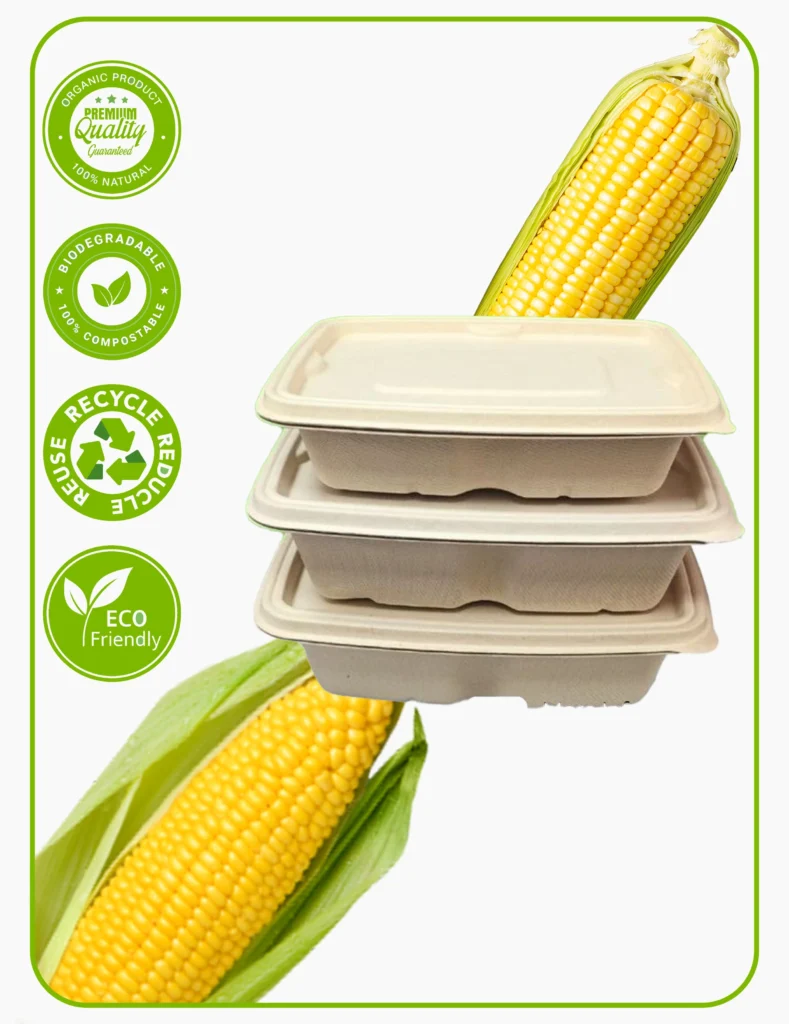
1. 100% Biodegradable and Compostable
Traditional plastics take upwards of 500 years to break down. CPCB-certified cornstarch packaging from SAKRT decomposes naturally in a composting environment within just 180 days, leaving behind nutrient-rich biomass instead of toxic microplastics.
2. Non-Toxic and Food Safe
Because it is made from organic matter, cornstarch packaging does not leach harmful chemicals (like BPA or phthalates) into food, even when exposed to heat. This makes it the ultimate choice for food packaging and tableware.
3. Reduces Carbon Footprint
Manufacturing PLA produces significantly fewer greenhouse gas emissions compared to petroleum-based plastics. By choosing cornstarch, businesses actively reduce their environmental impact.
4. Excellent Durability and Oil Resistance
Don’t let the “plant-based” label fool you. High-quality cornstarch packaging is incredibly durable, tear-resistant, and naturally resistant to fats and oils, making it perfect for restaurant takeaways and grocery stores.
Cornstarch Packaging vs. Traditional Plastic
Feature | Cornstarch Packaging (PLA) | Traditional Plastic |
Raw Material | Renewable Plant Starch (Corn) | Non-renewable Petroleum |
Decomposition Time | ~180 Days (in compost conditions) | 400 – 1,000 Years |
Microplastics | Zero | High |
Toxicity | Chemical-free, Food Safe | Contains BPAs & toxins |
Make the Switch with SAKRT
If you are a business looking to eliminate single-use plastics, cornstarch packaging is the future. However, it is vital to ensure you are buying from certified manufacturers to guarantee true compostability.
At SAKRT, we are a Mangaluru-based, CPCB-certified manufacturer of 100% compostable bags and sustainable packaging solutions. Whether you need eco-friendly garbage bags, retail carry bags, or food-safe packaging, our products are designed to protect both your products and the planet.
SAKRT – A Brand of Envirly Innovations Pvt Ltd
What is cornstarch packaging made of?
Cornstarch packaging is made by using the sugars and starch from the corn plant in a fermentation process, which produces polylactic acid, also known as PLA.
Cornstarch a veg or non veg?
Cornstarch is made entirely from the inside part of corn, so it is definitely vegan.
Is cornstarch healthy or unhealthy?
Cornstarch isn’t inherently bad when used in moderation, but it’s a highly processed, refined carbohydrate that lacks fiber, protein, and essential nutrients. Because it digests quickly, consuming large amounts can cause blood sugar spikes and weight gain, making it risky for those with diabetes or insulin resistance.
Why do people avoid corn starch?
People stay away from cornstarch because it has a high glycemic index, doesn’t provide important nutrients, and can cause blood sugar to rise quickly.Since it’s a refined carb, eating it often may also raise triglyceride levels.Plus, people with a corn allergy need to avoid it, and some people eat raw starch instead.
Which is healthier, potato or corn starch?
Potato starch and cornstarch are very similar in terms of nutrition, but potato starch is usually seen as a better option.It functions as a resistant starch, which helps keep the digestive system healthy.Potato starch is often made from non-GMO, whole foods.Cornstarch, on the other hand, is more processed and is commonly made from genetically modified corn.