
When you enjoy a meal on sturdy, natural-looking disposable tableware, you might not realize the incredible journey that plate took to reach your table. As India and the world rapidly shift away from single-use plastics, bagasse plates have emerged as the leading hero of the sustainable food packaging revolution.
But what exactly is bagasse, and how does a sweet sugarcane stalk become a durable, compostable plate?
At SAKRT, we believe that understanding the origin of your eco-friendly packaging makes you appreciate its environmental impact even more. Let’s walk through the fascinating lifecycle of bagasse tableware.
What is Bagasse?
Bagasse (pronounced buh-gas) is the fibrous, dry, pulpy residue left over after sugarcane stalks are crushed to extract their sweet juice. Historically, sugar mills would either burn this agricultural waste for fuel or leave it in landfills to rot.
Today, innovative manufacturing processes have transformed this “waste” into a premium, bio-based raw material used to create sugarcane bagasse tableware, including compostable plates, bowls, and takeaway containers.
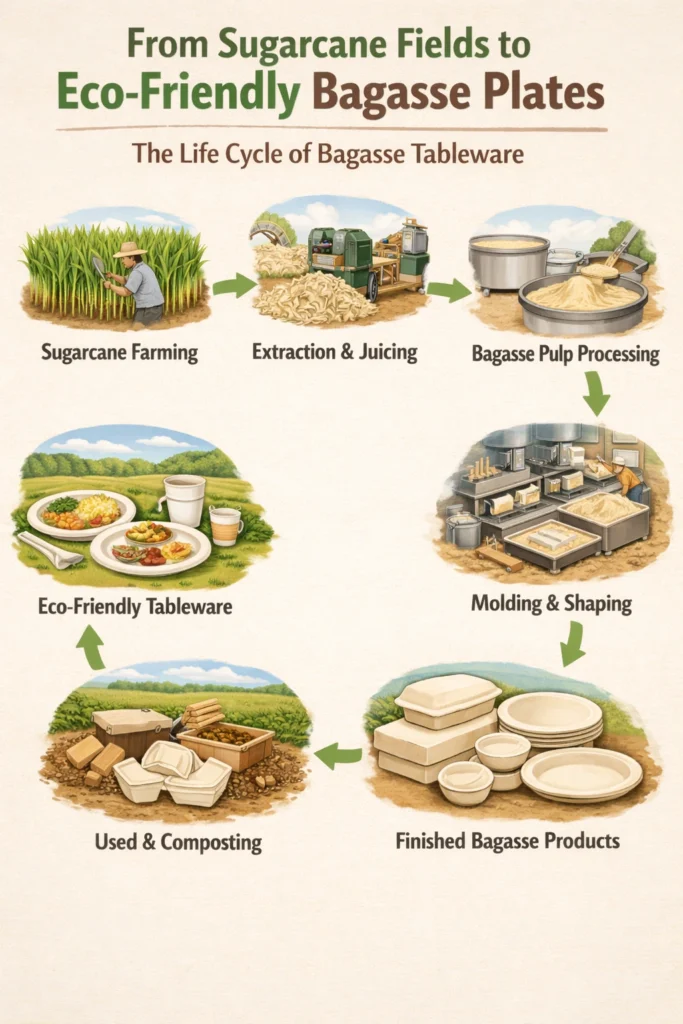
The 5-Step Lifecycle of Bagasse Plates
Step 1: Harvesting and Juice Extraction
The journey begins in the vast sugarcane fields. Once the sugarcane reaches maturity, it is harvested and transported to sugar mills. Here, heavy machinery crushes the stalks to extract the sugar juice. For every 10 tonnes of sugarcane crushed, roughly 3 tonnes of wet bagasse fiber are produced as a byproduct.
Step 2: Washing and Boiling the Fibers
Step 3: Beating and Pulping
The cleaned fibers are then transferred into giant beating machines. Much like the traditional paper-making process, the bagasse is beaten until it breaks down into a smooth, consistent pulp. Because bagasse is naturally highly fibrous, this pulp requires zero toxic chemicals or synthetic binders to hold it together making bagasse plates 100% food-safe.
Step 4: Thermoforming and Molding
This is where the magic happens. The wet sugarcane pulp is poured into custom-designed molds. Using high heat and intense pressure (a process called thermoforming), the moisture is squeezed out, and the pulp is baked into its final shape. Whether it’s a 3-compartment meal tray or a classic round plate, the thermoforming process ensures the product is incredibly durable, cut-resistant, and capable of holding hot liquids without leaking.
Step 5: Quality Testing, Trimming, and Packaging
Once the molds are opened, the edges of the eco-friendly plates are trimmed for a clean, smooth finish. The products go through rigorous quality control checks to ensure they are oil-resistant, water-resistant, and microwave-safe. Finally, they are packaged in eco-friendly materials and shipped to distributors, restaurants, and eco-conscious consumers across India.
Why Bagasse Plates are Better Than Plastic and Paper
When comparing food packaging options, sugarcane bagasse outshines traditional materials across the board:
- Zero Deforestation: Unlike paper plates which require cutting down trees, bagasse utilizes an agricultural byproduct that is harvested annually.
- Highly Durable: They don’t bend under the weight of heavy Indian gravies, nor do they turn soggy quickly like standard paper plates.
- Microwave & Freezer Safe: Bagasse can withstand temperatures from -25°C to 220°C, making it incredibly versatile for both hot and cold foods.
- No Toxic Microplastics: Since they contain no petroleum, they never leach harmful chemicals into your hot food.
The End of the Lifecycle: Returning to the Earth
The true beauty of the bagasse plates lifecycle is how it ends. While plastic takes 500 years to break down (and only fragments into microplastics), bagasse is 100% compostable.
When disposed of in a commercial composting facility or a well-maintained home compost bin, bagasse tableware breaks down naturally into nutrient-rich organic matter within 60 to 90 days. It leaves zero toxic residue behind. The compost created can then be used to fertilize soil perhaps even the very fields where the next generation of sugarcane will grow. A perfect, closed-loop circular economy.
Make the Switch to Sustainable Dining with SAKRT
Understanding the lifecycle of sugarcane bagasse tableware highlights just how powerful simple, nature-based innovations can be. By choosing compostable food packaging over single-use plastics, businesses and consumers can drastically reduce their carbon footprint.
Are you looking for premium, CPCB-certified compostable packaging solutions for your business? [Link “compostable packaging solutions” to your main products page]. Explore SAKRT’s extensive range of eco-friendly tableware and bags today.
SAKRT – A Brand of Envirly Innovations Pvt Ltd
Ready to Go Green?
Join hundreds of businesses making the switch to eco-friendly packaging solutions.