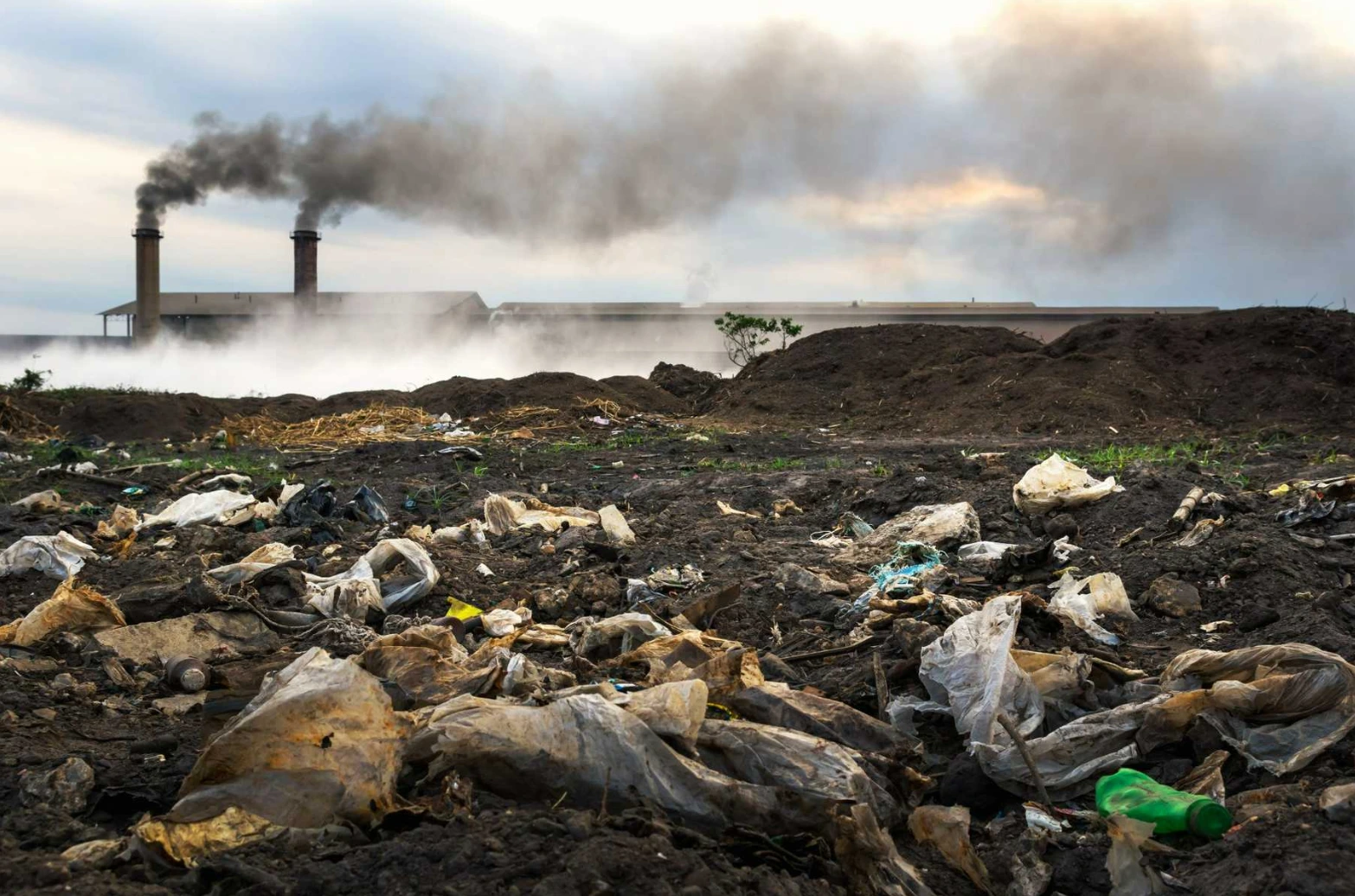
From preserving fresh produce in supermarkets to securing pallets in logistics, wrapping films are an essential part of global supply chains. However, traditional plastic stretch wraps and cling films are notorious environmental hazards. Because they are thin, contaminated with food, and difficult to separate, they are almost never recycled, ending up directly in landfills and oceans.
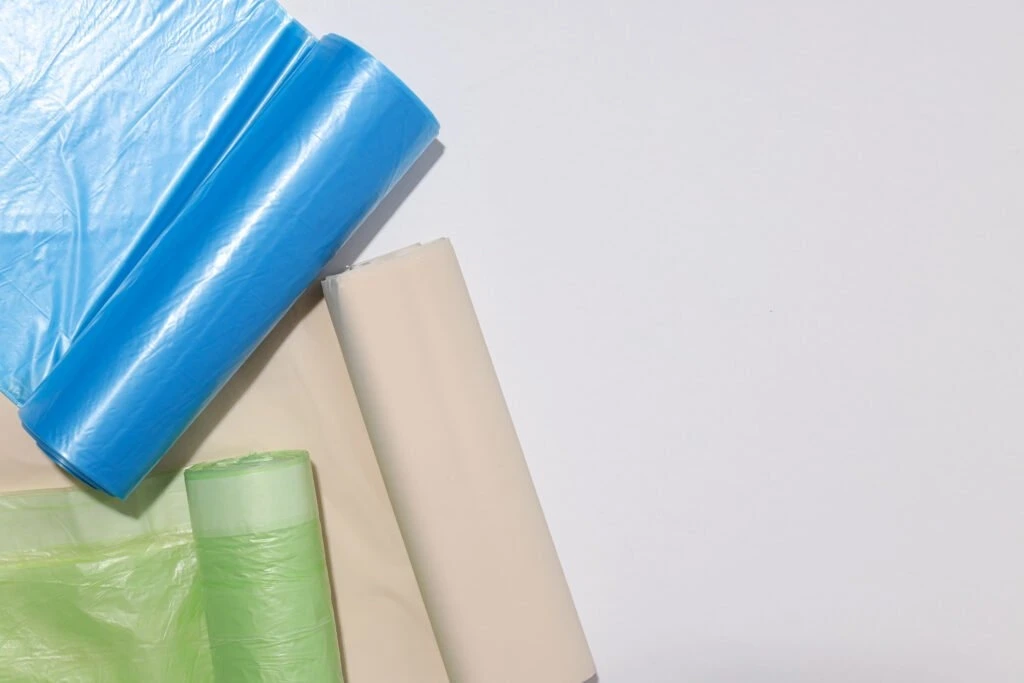
Enter compostable wrapping films—the game-changing innovation that provides the same stretch, cling, and protection as plastic, but returns safely to the earth.
At SAKRT, we are proud to manufacture CPCB-certified compostable wrapping films that are helping businesses across India transition to a greener, zero-waste future.
What Are Compostable Wrapping Films?
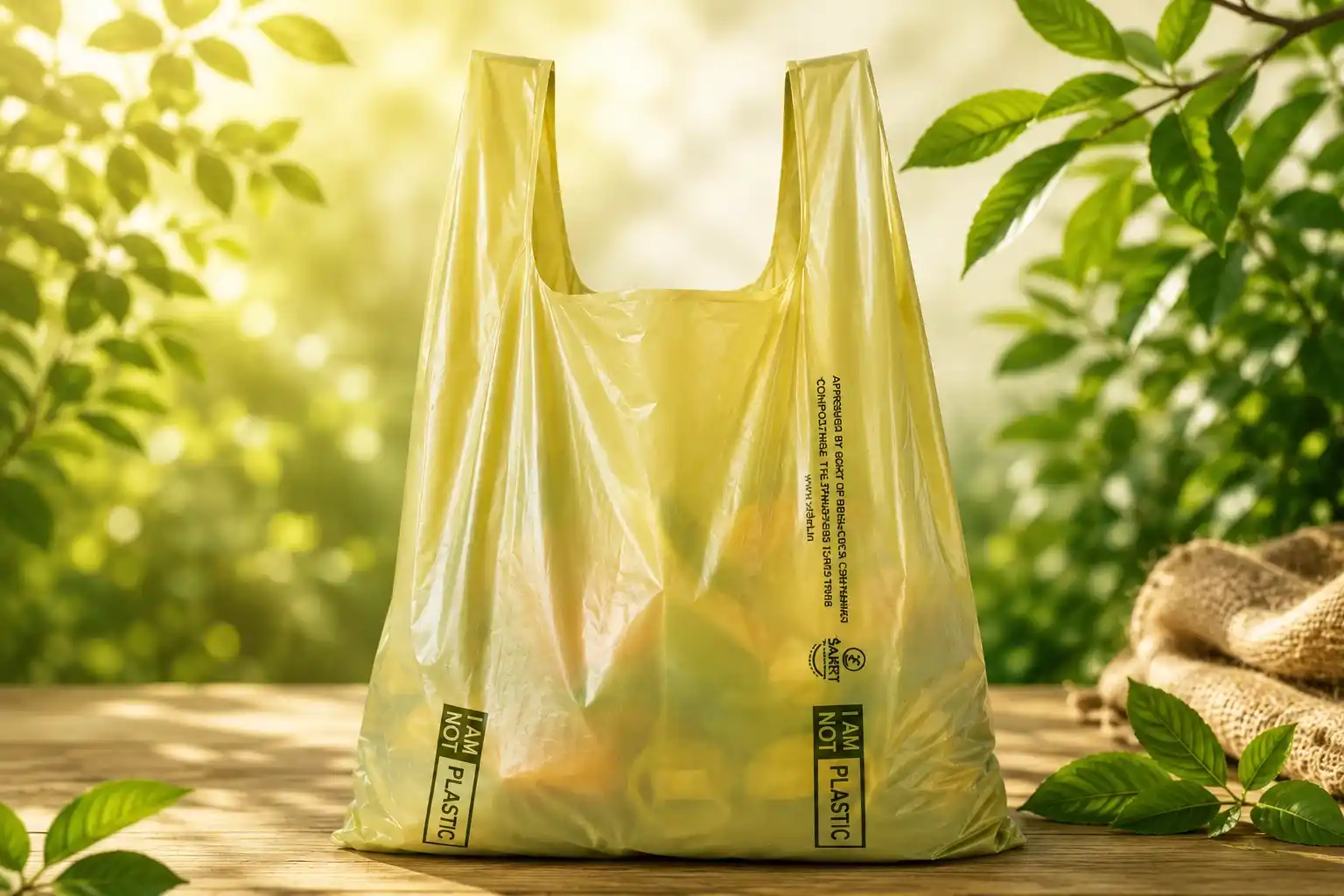
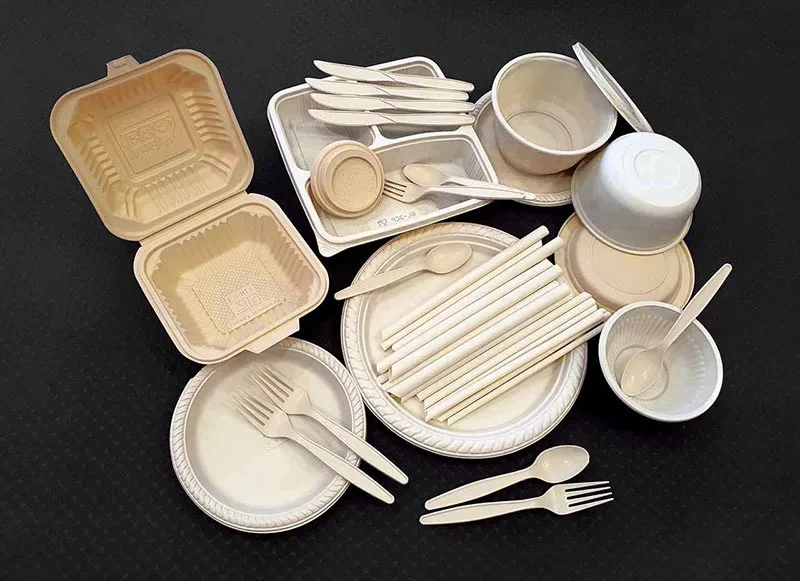
Compostable wrapping films are thin, flexible packaging materials made from plant-based biopolymers (like corn starch or sugarcane derivatives) rather than petroleum-based plastics like PVC or PE (Polyethylene).
Unlike conventional cling films that take hundreds of years to fragment into harmful microplastics, true compostable films are designed to decompose in a composting environment. Within 180 days, microorganisms break the film down into water, carbon dioxide, and nutrient-rich organic matter.
Traditional Plastic Wrap vs. Compostable Film
To understand why this switch is critical, we need to look at how traditional wraps compare to plant-based alternatives.
The Problem with PVC and PE Plastics
Traditional cling wrap is often made from Polyvinyl Chloride (PVC) or Low-Density Polyethylene (LDPE). These materials rely on fossil fuels for production. When used for food packaging, they can sometimes leach harmful chemicals (like plasticizers) into oily or hot foods. Post-use, their lightweight nature means they easily blow out of waste bins, cluttering ecosystems and suffocating wildlife.
The Plant-Based Alternative
Compostable stretch and cling films eliminate these risks. Because they are derived from renewable natural resources, their carbon footprint is significantly lower. More importantly, they offer a definitive end-of-life solution. When disposed of with organic waste, they become fertilizer, completely closing the lifecycle loop.
Benefits of Switching to Compostable Wrapping Films
For businesses in food service, retail, and manufacturing, switching to SAKRT’s compostable wrapping films offers distinct operational and brand advantages.
1. 100% Microplastic-Free and Eco-Safe
By utilizing certified compostable materials, you guarantee that your packaging will not contribute to the global microplastic crisis. The film leaves behind zero toxic residue, ensuring complete environmental safety.
2. High Performance: Stretch, Cling, and Durability
A common misconception is that eco-friendly means lower quality. Modern compostable films are engineered for high tensile strength, excellent puncture resistance, and superior “cling.” Whether you are wrapping a sandwich or securing a heavy industrial box, these films perform seamlessly on existing wrapping machines.
3. Food-Safe and Breathable
Compostable wraps are highly breathable, which is a massive advantage for the food industry. They allow optimal moisture and oxygen transmission, which helps prevent condensation and extends the shelf life of fresh fruits, vegetables, and bakery items safely.
4. Regulatory Compliance
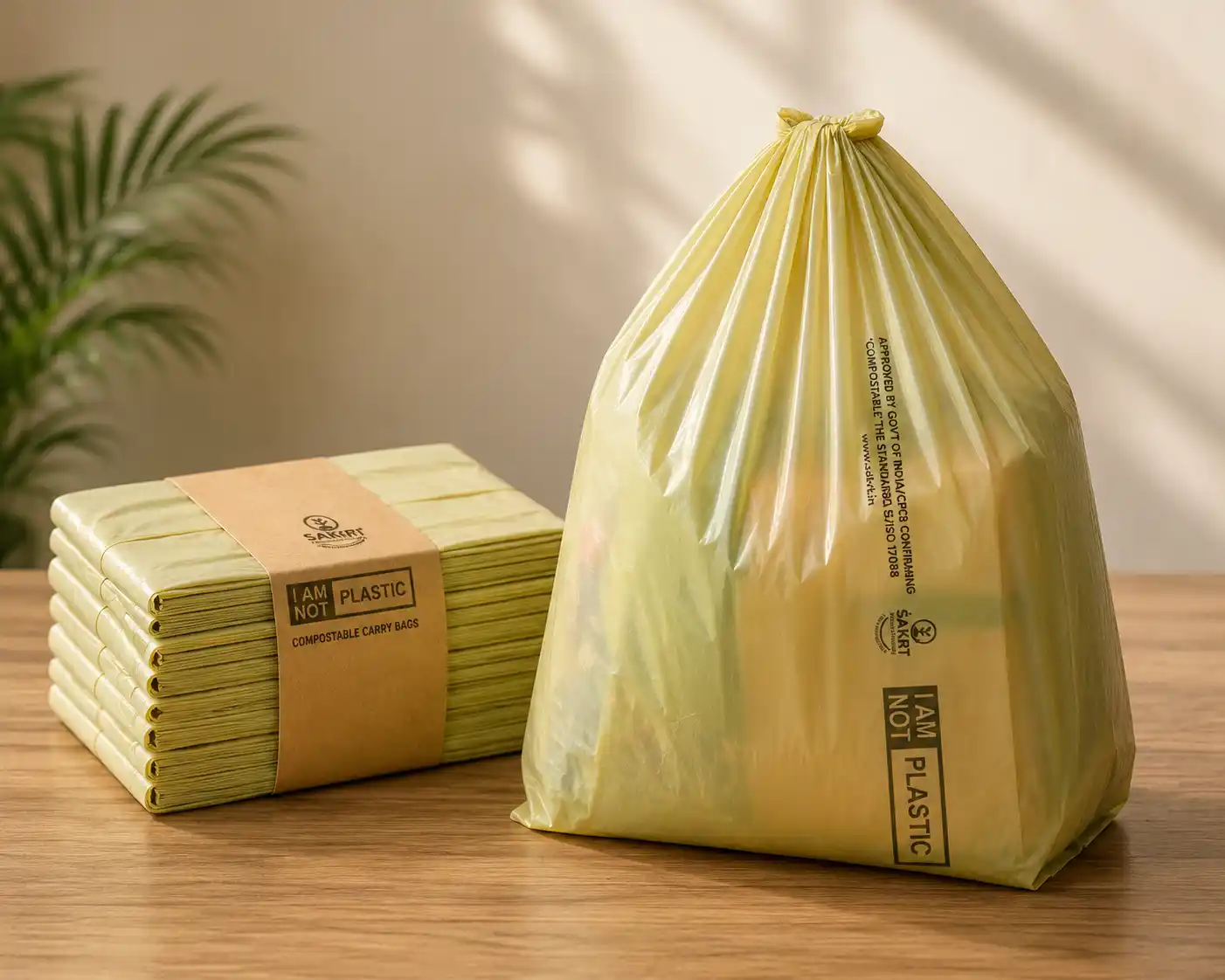
With the Indian government strictly enforcing bans on various single-use plastics, businesses must adapt. SAKRT’s wrapping films are approved by the Central Pollution Control Board (CPCB), ensuring your business stays fully compliant with all state and national environmental regulations.
Make the Switch with SAKRT
Sustainability is no longer just a trend; it is a business necessity. By adopting compostable wrapping films, you drastically reduce your company’s plastic footprint while appealing to increasingly eco-conscious consumers.
As a leading manufacturer of sustainable packaging in Mangaluru, SAKRT provides wholesale compostable stretch and cling films tailored to your business needs.
SAKRT – A Brand of Envirly Innovations Pvt Ltd
Choose SAKRT’s Biodegradable Products
Join the sustainability revolution today!
Choose SAKRT’s biodegradable products for your home, business, or event and make waste disposal responsible.