Certified
product

Ontime
delivery

Custom
orders

Easy Returns/
Replacement
About This Products
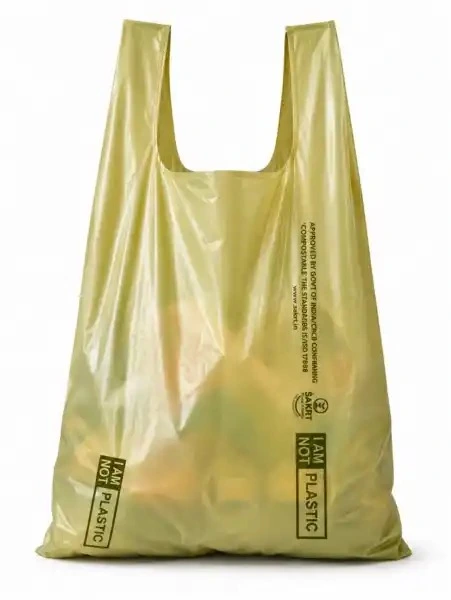
- Made from biodegradable materials that decompose naturally, making this grocery bag an eco-conscious alternative to plastic.
- Equipped with sturdy handles for comfortable carrying during daily grocery runs.
- Lightweight and foldable design allows compact storage when not in use.
- Durable construction supports regular grocery loads while remaining compostable.
- Suitable for groceries, vegetables, fruits, and everyday carrying needs.

CPCB CERTIFIED
BPA-free and non-toxic, safe for carring goods.
Why Compostable grocery bag?
A compostable grocery bag helps reduce plastic waste and supports a cleaner, greener environment. Unlike conventional plastic bags, it breaks down naturally without leaving harmful residues. Choosing a compostable grocery bag is a simple yet impactful step toward sustainable living, responsible shopping, and protecting the planet for future generations.
Additional Product Details
- Made from plant-based, biodegradable materials.
- 100% compostable under natural composting conditions.
- Lightweight yet strong build.
- Tear-resistant for everyday grocery use.
- Smooth finish with a clean white appearance.
- Comfortable grip handles.
- Safe for carrying food items.
- Non-toxic and eco-friendly.
- Suitable for home and retail use.
- Designed for repeated short-term usage before composting.
Usage Applications:
- Daily grocery shopping.
- Carrying fruits and vegetables.
- Retail and supermarket packaging.
- Household storage and carrying needs.
- Eco-friendly alternative for plastic carry bags.
SAKRT – A Brand of Envirly Innovations Pvt Ltd
Choose SAKRT’s Biodegradable
Grocery bag
Join the sustainability revolution today!
Choose SAKRT’s biodegradable products for your home, business, or event and make waste disposal environmentally responsible.
Related Products
FAQs
Compostable bags are made from renewable plant-based starch materials and are designed to decompose without releasing harmful or toxic substances into the environment. In a composting system, naturally occurring microorganisms break down these bags into nutrient-rich compost, contributing to a sustainable and eco-friendly waste management process.
Compostable bags are versatile and environmentally friendly, making them suitable for a wide range of applications. For grocery shopping, they serve as a sustainable alternative to conventional plastic bags, helping reduce plastic waste. They are also ideal for food packaging, including fruits, vegetables, snacks, and other food products. Made from safe, plant-based materials, compostable bags are suitable for direct food contact and do not release harmful chemicals, ensuring both safety and sustainability.
Compostable bags are genuinely designed to decompose, but most require the controlled conditions found in commercial composting facilities to break down effectively. They typically do not degrade properly in regular trash bins, landfills, or most home compost systems because these environments lack the necessary heat, oxygen, and microbial activity. Under industrial composting conditions, compostable bags can fully decompose into natural elements without leaving harmful residues behind.
Plastic pollution poses serious threats to wildlife, pollutes water bodies, and contributes to the growing problem of microplastics entering the food chain. Compostable grocery bags offer a more sustainable alternative by breaking down into natural organic matter under appropriate composting conditions. By replacing conventional plastic bags with compostable options, consumers can help reduce environmental pollution and support a cleaner, healthier ecosystem.
Under proper composting conditions, most compostable products are designed to break down efficiently, with up to 90% decomposing within approximately 180 days. This rapid degradation helps reduce waste accumulation and supports a circular waste management system.
Compared to biodegradable plastics, compostable products offer additional environmental advantages. Their production typically requires less water and energy while generating lower greenhouse gas emissions. As a result, compostable materials represent a more sustainable solution for reducing environmental impact and promoting responsible consumption.