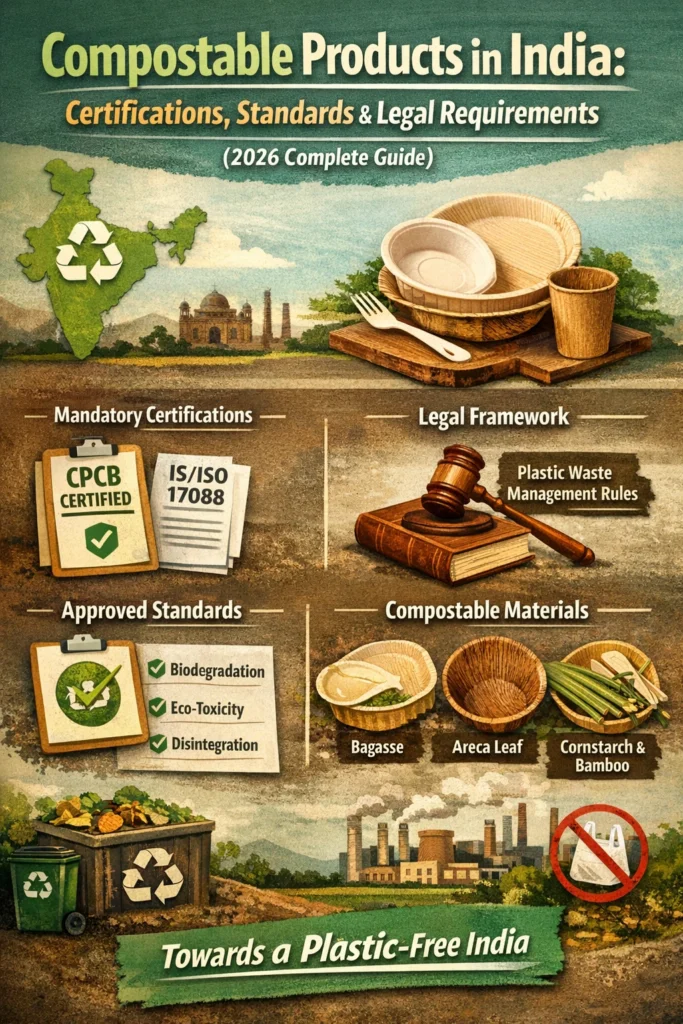
In a time when taking care of the environment is very important, compostable products are playing a big role in India’s efforts to reduce plastic waste. The country produces more than 3.5 million tonnes of plastic waste each year, so moving towards eco-friendly options like compostable bags, packaging, and single-use items is becoming more popular. This guide, which has been updated for 2026, looks at the certifications, standards, and legal rules that apply to compostable products in India. Whether you’re a manufacturer, an organization working for green policies, a reporter covering environmental issues, a researcher, or a platform promoting sustainability, this guide gives you useful information to understand the rules and help make the environment better.
What Are Compostable Products?
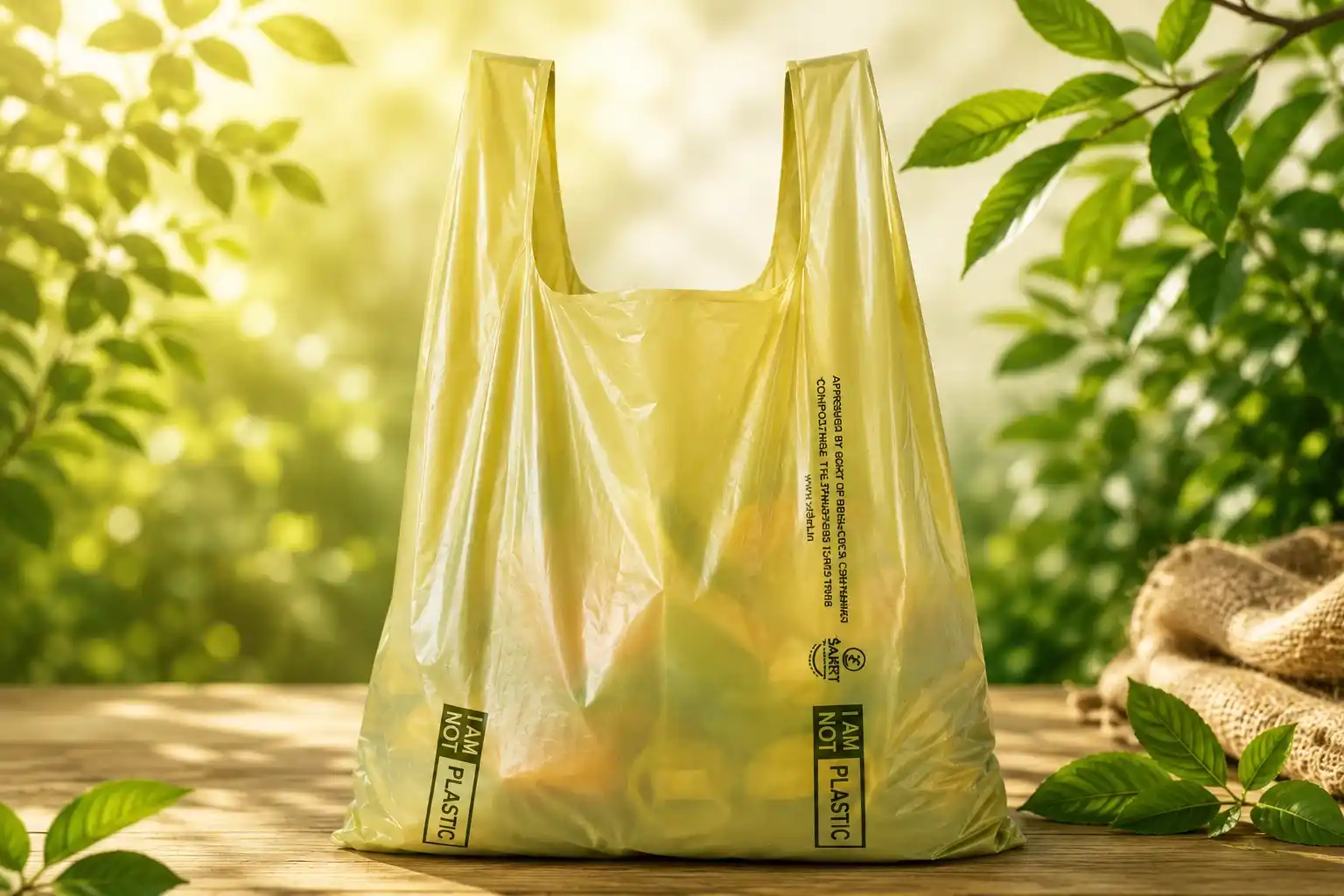
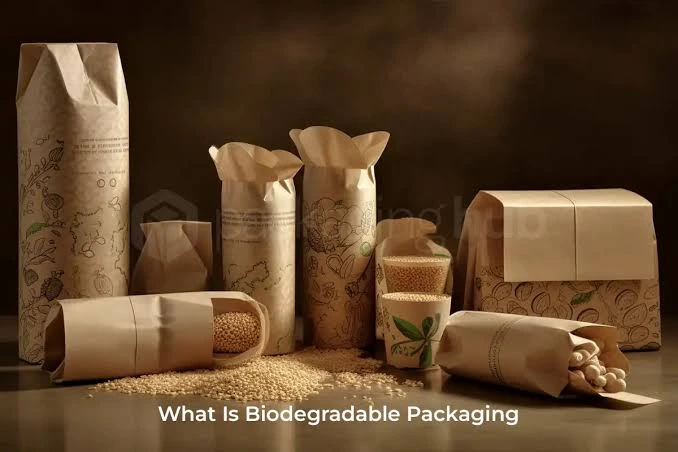
Compostable products are made from materials that can fully break down in a composting setup, turning into rich soil with nutrients and without leaving harmful leftovers. These items are different from regular plastics, which can last for a very long time. Compostable items are usually made from natural sources like cornstarch, sugarcane fiber, or PLA (polylactic acid), and they need certain conditions like heat, water, and microbes to break down properly.
In India, it’s important to know the difference between “compostable” and “biodegradable.”
Compostable plastics break down only in special composting plants, while biodegradable products can break down in places like soil or landfills, and they don’t leave behind microplastics. This helps avoid misleading claims and ensures real environmental benefits.
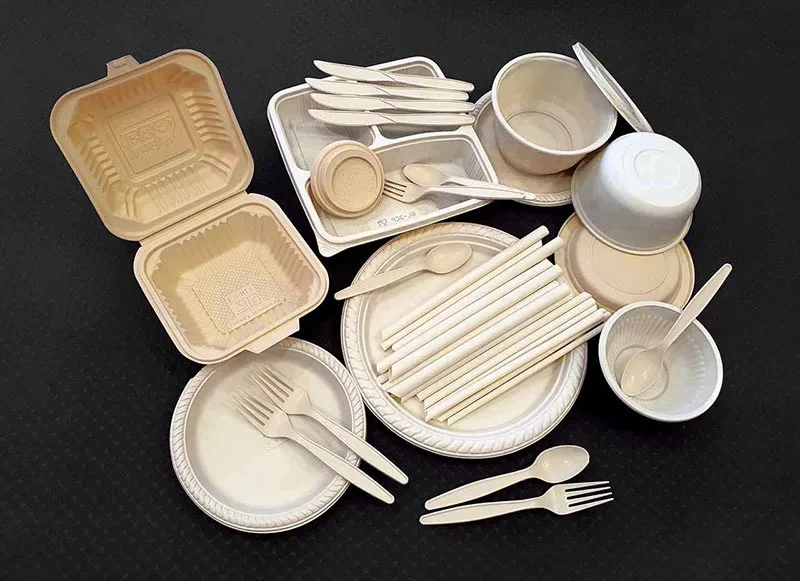
Key examples include:
- Compostable carry bags and garbage liners
- Food packaging (e.g., trays, cups, and films)
- Agricultural mulch films and disposable cutlery
Using these products helps lessen the amount of waste going to landfills and also helps India reach its goals for a circular economy. This aligns with worldwide efforts like the UN Sustainable Development Goals (SDGs).
The Legal Framework Of Compostable Products in India
India’s rules for compostable products are part of the larger system for managing plastic waste. The main guideline is the Plastic Waste Management (PWM) Rules, 2016, which have been changed several times to support more sustainable options.
Key Legislations and Amendments
- PWM Rules, 2016 (Amended): At first, these rules stopped some single-use plastics from being used and allowed the use of compostable options instead. In 2022, the rules were changed to make Extended Producer Responsibility even stronger. Now, the people who make products have to take care of their products throughout their life, including collecting and getting rid of them properly.
- In 2022, changes were made to make the EPR rules for bioplastics stricter. These rules now require companies to track where their bioplastics come from and how they are disposed of at the end. However, compostable plastics that have the right certification are not affected by the SUP bans.
- In 2024, a new category for biodegradable plastics was introduced under IS 17899T. This category is different from compostable materials and requires the plastics to break down completely without leaving any residue.
- Plastic Waste Management (Second Amendment) Rules, 2025: These new changes make it easier for food packaging made from plastic by reducing the requirement for recycled materials. If some recycling targets weren’t met in 2025-2026, those unpaid goals can be carried over for three more years. The rules also change how non-compostable packaging is labeled, but they keep the rules tight for compostable items.
These laws are carried out by the Ministry of Environment, Forest and Climate Change (MoEFCC) and the Central Pollution Control Board (CPCB). The state pollution control boards are responsible for implementing these rules at the local level. If someone breaks these rules, they may face fines up to one lakh rupees or even imprisonment, which shows how important it is to follow them.
Standards in Compostable Products
Standards make sure that compostable products work as they are supposed to, which helps keep consumers and the environment safe. In India, these standards are created by the Bureau of Indian Standards (BIS) and follow the same rules as around the world.
Primary Standards
- IS/ISO 17088:2021 is the main standard for compostable plastics in India. It outlines the rules for how well these plastics can break down, come apart, and leave behind good compost. It also checks if they are safe for the environment. Products made under this standard must:
- Biodegrade at least 90% within 180 days.
- Disintegrate into fragments smaller than 2mm within 12 weeks.
- Leave no heavy metals or toxic residues.
- IS 17899T (for Biodegradable Plastics): This standard came into effect in 2024. It says that the plastics must fully break down in certain environments like soil, and they should not leave behind any microplastics. Also, the packaging needs to clearly show how long it takes for the plastic to break down.
Alignment with International Standards
Indian standards draw from global ones:
- EN 13432 (Europe) is about industrial composting and works like IS/ISO 17088.
- ASTM D6400 (USA) makes sure items break down in composting plants and is often needed for exporting.
Standard | Focus | Key Requirements | Applicability in India |
IS/ISO 17088:2021 | Compostable Plastics | 90% biodegradation in 180 days; No toxins | Mandatory for compostables |
IS 17899T | Biodegradable Plastics | Full decomposition; No microplastics | For non-compostable biodegradables |
EN 13432 | Industrial Compostability | Disintegration and eco-safety | Export-oriented products |
ASTM D6400 | Compostability | Breakdown in composting | US/International compliance |
Manufacturers need to have their products tested in labs that are approved by either the CPCB or BIS to ensure they meet the required standards.
Certifications: How to Obtain and Why They Matter
In India, having the proper certification is required if you want to legally make, bring in, or sell compostable products.
Key Certifications
- CPCB Certification: Mandatory for all compostable plastics. As of June 2025, 267 e-certificates have been issued to manufacturers. It verifies compliance with IS/ISO 17088 and includes:
- Product testing for compostability.
- Registration on the CPCB’s centralized e-certification portal.
- Inclusion in the official list of certified entities.
- BIS Certification: Follows Indian standards and is usually part of the CPCB procedures.
- Additional for Food Contact: FSSAI approval makes sure no harmful chemicals seep out, as per the Food Safety and Standards (Packaging) Amendment Regulations, 2022.
Certification Process
- Testing: Send samples to approved labs like CIPET or private BIS-approved centers.
- Application: Sign up on the CPCB website with your test results and information about how you make the product.
- Approval: The CPCB checks your information and gives an e-certificate if everything meets the rules.
- Renewal: You need to have yearly checks and update your approval as per EPR guidelines.
If a product doesn’t have CPCB certification, it can’t be advertised as compostable, which could lead to legal problems.
Labeling and Compliance Requirements
Correct labeling helps people to trust the product and makes it easy to track where it comes from.
Not following the rules can result in the product being taken away and facing fines.
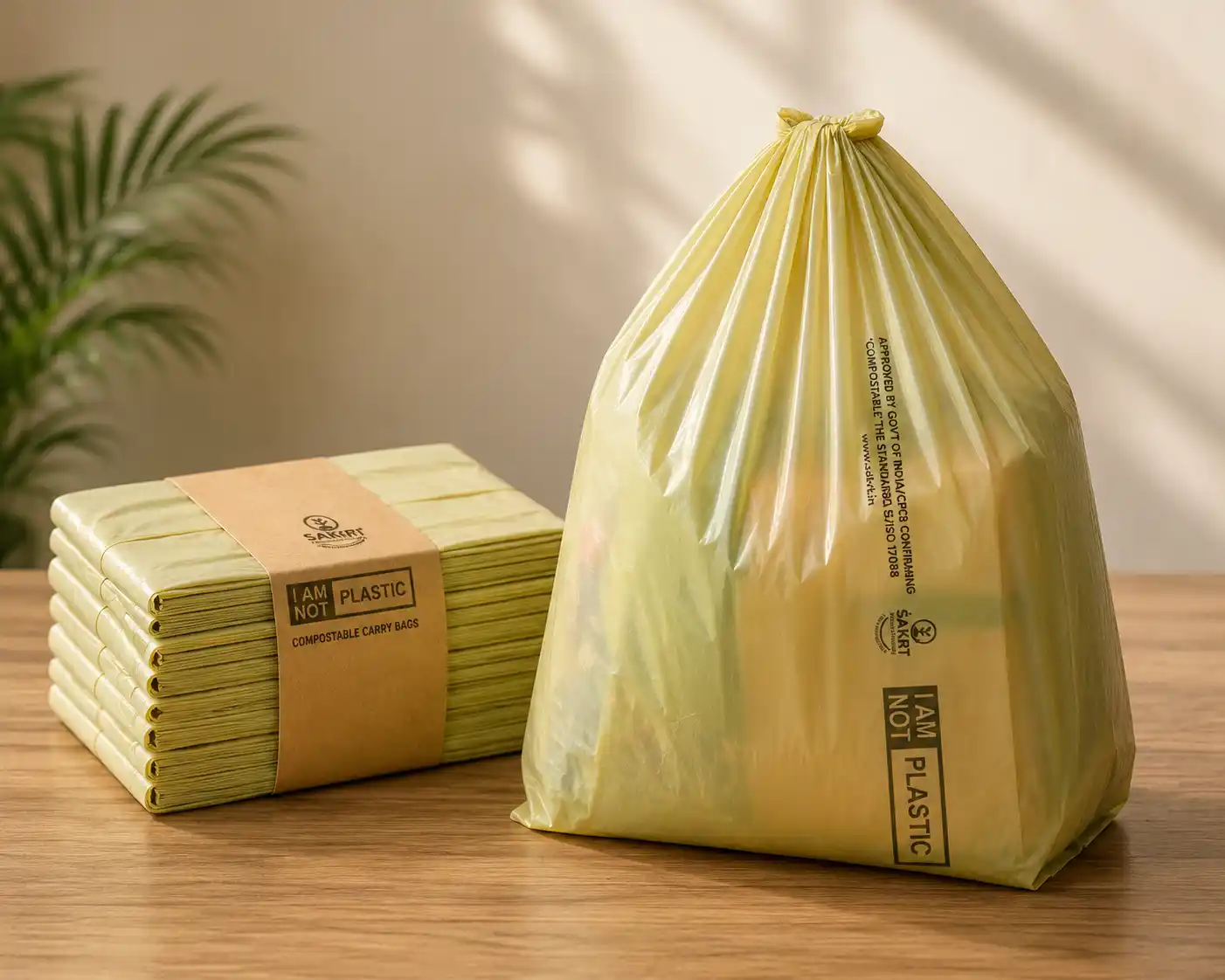
- Mandatory Labels: The word “COMPOSTABLE” must be clearly shown, along with certification symbols like the CPCB logo.
- For Biodegradable Products: You need to mention the specific environment and time it takes to break down, such as “Biodegradable in soil within 2 years.”
- QR Traceability: Starting from 2025, QR codes are required to track recycled content and ensure EPR compliance.
- Prohibitions: You cannot make false statements.
- If a bag is compostable, it must follow the IS 17088:2008 standard.

Extended Producer Responsibility (EPR) for Compostable Products
EPR makes producers, importers, and brand owners responsible for managing waste.
- Registration is required on the CPCB website to track how much waste is collected and recycled.
- For the period 2025-26, rigid packaging must contain at least 30% recycled material starting from that time, and this percentage will increase each year.
- Compostable materials are allowed some exceptions but must still be disposed of properly.
- If targets are not met in 2025-26, the responsibility can be carried over for three years, especially for items that come into contact with food.
This system encourages the use of sustainable materials like hemp-based biopolymers.
Challenges and Opportunities
Challenges:
- Limited composting facilities: Only big industrial sites can properly process certified compostable items.
- Enforcement issues: Companies still mislead customers about their products being eco-friendly, even with existing rules.
- Cost: Compostable products are 20 to 30 percent pricier than regular plastics.
Opportunities:
- Market Growth: The compostable PHA film market is expected to grow to $3,484.8 million by 2036, with India showing a 16.2% annual growth rate.
- Export Potential: Meeting standards like those in the EU (EN 13432) and the US (ASTM D6400) helps open up international markets.
- Incentives: The government offers support to certified manufacturers through subsidies and EPR credits.
NGOs and colleges can use this for their awareness campaigns, and journalists can share stories about successes.
Future Outlook for 2026 and Beyond
By 2026, there will be stricter rules for EPR, possible requirements for using recycled materials in compostable products, and joining international rules like the EU’s PPWR, which says all packaging must be recyclable or compostable by 2030. New developments in materials that can be composted at home and combined certification systems, like BPI’s home and commercial ones, might affect how India sets its own standards.
Conclusion
This 2026 guide shows how India is moving forward with compostable products by setting strict standards and offering real support. By following IS/ISO 17088, getting CPCB certification, and using EPR, people involved can help make India free from plastic. Spread this information with your friends and colleagues like bloggers, NGOs, colleges, reporters, and environmental websites to share the message and create links that help everyone work together. For the latest news, check out environmental policy updates or visit CPCB websites.
SAKRT – A Brand of Envirly Innovations Pvt Ltd
Choose SAKRT’s Biodegradable Products
Join the sustainability revolution today!
Choose SAKRT’s biodegradable products for your home, business, or event and make waste disposal responsible.
FAQs
Certified compostable products in India are items that have been tested and approved by authorized bodies to decompose completely into non-toxic elements under composting conditions. These products must meet specific standards such as IS/ISO 17088 and receive CPCB certification to be legally sold or used as plastic alternatives
Yes, CPCB certification is mandatory for all compostable plastic products in India. Without approval from the Central Pollution Control Board, products claiming to be compostable are considered non-compliant under the Plastic Waste Management Rules and cannot be legally manufactured or sold.
Compostable products in India follow defined standards for decomposition and leave no harmful residue, whereas biodegradable products may take an undefined time to break down and can still create microplastics. Only certified compostable products are legally accepted as substitutes for banned single-use plastics.
Compostable products in India should ideally be disposed of along with organic or wet waste so they can be processed through composting systems. They should not be mixed with recyclable plastic waste, as this can contaminate recycling streams and reduce overall waste management efficiency.
Most compostable products in India decompose within 90 to 180 days under proper composting conditions. The exact duration depends on the material used and whether the product is processed through home composting or industrial composting facilities.