MADE IN KARNATAKA- Govt Certified
CPCB Certified Compostable Carry Bags in Karnataka
100% Eco-Friendly, Plastic-Free Carry Bags Fully Compliant with Karnataka State Pollution Control Board (KSPCB) & CPCB Norms.
Are you a retailer, business owner, or distributor in Karnataka looking for a legal, durable, and eco-friendly replacement for single-use plastic bags? At SAKRT, based in Mangaluru, we manufacture high-performance compostable carry bags made from renewable plant-based biopolymers. Our bags offer superior load-bearing strength, liquid resistance, and complete peace of mind under local plastic regulations.
Why SAKRT Compostable Carry Bags Stand Out
Unlike conventional plastic or unverified “degradable” bags, SAKRT carry bags are scientifically formulated to decompose into non-toxic organic biomass, water, and carbon dioxide within 180 days in composting conditions.

CPCB CERTIFIED


Technical Specification
Details Standard
Material Base
Plant-based cornstarch biopolymer (0% Petro-plastic)
Certifications
CPCB Approved, IS/ISO 17088 Compliant, KSPCB Recognized
CPCB License Number
[Insert SAKRT’s Official License No. Here]
Bag Types Available
W-Cut, D-Cut, Loop Handle, Grocery / Counter Bags
Thickness / Micron
30+ Microns (Customizable per client requirement)
Load Capacity
1 kg to 10+ kg (Tear-resistant bottom sealing)
Shelf Life
10 to 12 months (When stored in cool, dry conditions)
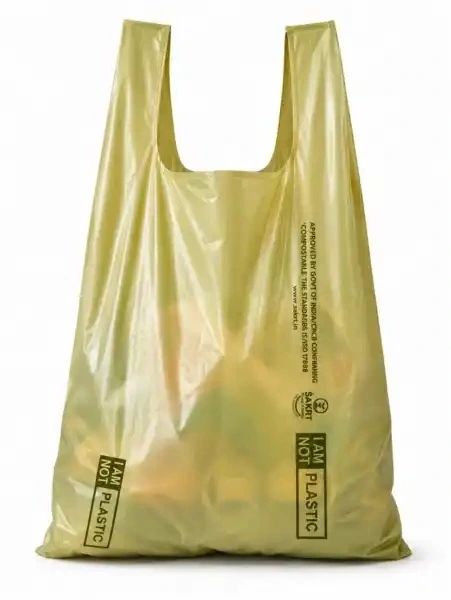
Certified & Compliant for Businesses Across Karnataka
Using unauthorized plastic carry bags in Karnataka can lead to heavy municipal fines, shop closures, and brand reputation loss. SAKRT carry bags protect your business from legal risks.
- CPCB & KSPCB Approved: Every batch features our official CPCB registration details, CPCB logo, and QR code printed directly on the bag as mandated by Indian law.
- Zero Toxic Microplastics: Tested and verified free from heavy metals and toxic chemicals. Safe for food packaging and environmental degradation.
- Heavy Duty Load Capacity: Engineered with high-strength bottom seals and high-tensile handles to prevent tearing during heavy grocery carrying.
A key benefit of water bottles is their eco-friendly material composition. Many biodegradable water bottles use plant‑based, compostable materials. Those materials help cut the use of fuels and back more sustainable ways to make products. Biodegradable water bottles are a fit, for businesses, events, health care spots and people who care about the planet. Biodegradable water bottles give a practical choice instead of the usual plastic bottle.
Applications Across Commercial & Retail Sectors
Our compostable carry bags are designed to meet the demands of fast-paced retail and commercial operations across Bengaluru, Mangaluru, Udupi, Mysuru, and all districts of Karnataka
Supermarkets & Grocery Stores
Leak-proof and sturdy enough to hold heavy food grains, oil packets, and fresh produce without stretching or bursting.
Retail Showrooms & Apparel Outlets
Premium aesthetic finishes available in standard sizes or custom branded prints to showcase your brand’s commitment to sustainability.
Restaurants, Bakeries & Food Delivery
Food-safe certified packaging suitable for hot takeaway containers, bakery boxes, and catering services.
Farmers Markets & Daily Local Markets
Moisture-resistant bags ideal for damp items, fresh vegetables, and seafood markets.
Our Direct Manufacturing & Quality Process
At our manufacturing facility in Mangaluru, Karnataka, we strictly adhere to international biopolymer processing standards.
1.100% Plant-Based Raw Materials:
We source natural, renewable starch-based biopolymers that are certified 100% free from polyethylene or polypropylene additives.
2.Precision Extrusion & Heat Sealing:
Using advanced extrusion equipment, we maintain consistent micron thickness and double-point heat sealing for maximum bottom strength.
3.Mandatory Regulatory Printing:
Each bag is printed with non-toxic, eco-friendly inks displaying the CPCB license number, manufacturer credentials, and QR code for instant field verification by officials.
Custom Printing & Bulk Wholesale Orders
Need your brand logo on eco-friendly bags? SAKRT offers custom flexographic printing using eco-friendly inks.
- Custom Brand Printing: Add your brand logo, tagline, and store contact details.
- Flexible Sizes: Available in small, medium, large, and extra-large options across W-Cut, D-Cut, and Loop Handle designs.
- Direct Factory Pricing: Order directly from our South Karnataka manufacturing plant for competitive B2B wholesale rates.
Related Products


READY TO SWITCH
MAKE YOUR NEXT
ORDER MATTER.
Whether you need 500 Water Bottles for a corporate event or 50,000 for a hotel chain we support custom orders, branded bottles, and on-time delivery across India.
7975310662
hello@sakrt.in
Mangalore, Karnataka, India
High-Quality Biodegradable Water Bottles
BULK ORDER ENQUIRY
SAKRT Envirly Innovations Pvt Ltd · Mangalore, Karnataka
FAQs
Yes. SAKRT carry bags are 100% CPCB certified and fully compliant with the Karnataka Plastic Waste Management Rules. They carry mandatory CPCB logos and license details printed on each bag.
Under composting conditions (soil moisture, microbial activity, and air), SAKRT compostable bags fully break down into natural organic matter within 180 days without leaving microplastics.
Yes, we offer custom dimensions, micron thickness, and brand logo printing for bulk B2B orders across Karnataka and South India.