

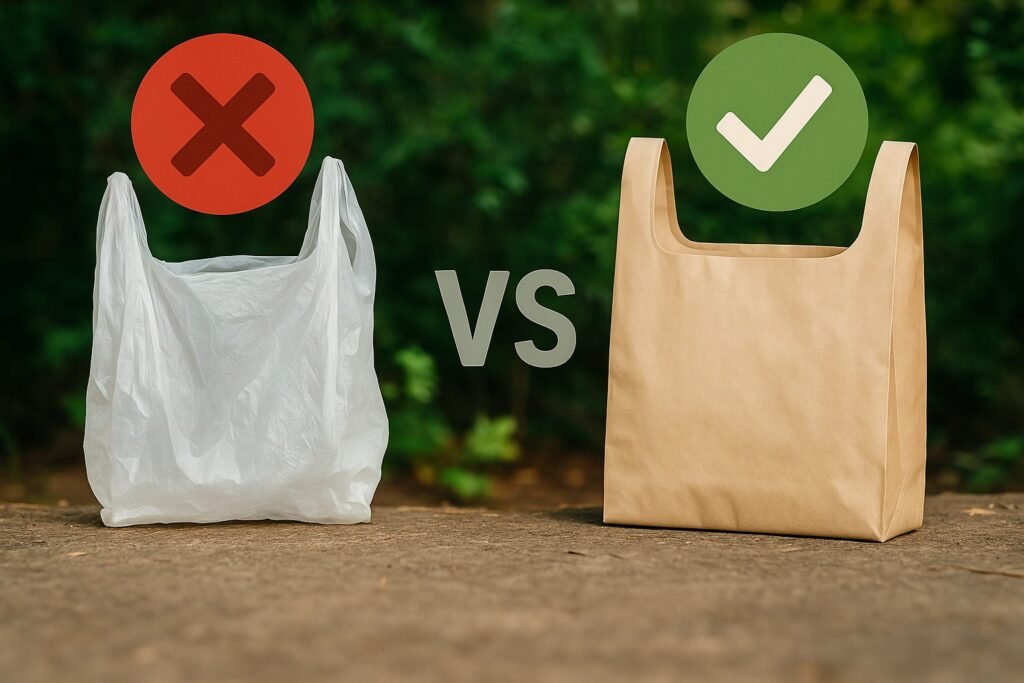
Over the last few years, non plastic carry bags have emerging with the massive demand for more environmentally friendly options. Unlike traditional plastic, which takes hundreds of years to decompose, biodegradable carry bags break down almost naturally and have a far smaller environmental footprint. Instead of a trend, the adoption of biodegradable bags should be seen as a necessity.
In this blog, we will examine the differences between compostable and biodegradable materials. The advantages of using biodegradable carry bags over traditional plastic, and the contribution of compostable materials towards the growing global plastic waste problem.
Why Are non plastic carry bags Better ?
When you compare synthetic plastic bags to biodegradable carry bags, it’s obvious that the latter are more environmentally friendly. Traditional plastic bags are made from fossil fuel-based polymers that take between 200-600 years to decompose. This simultaneously pollutes the seas and kills marine life.
Biodegradable carry bags, in contrast, are produced from plant-based materials like corn starch, PLA, or PBAT which can decompose within months when placed in the right environment. Unlike plastic, these carry bags will not release harmful microplastics as they do not break down further.
Key reasons why they’re better include:
Non plastic carry bags are not limited to these products and are also available as poly bags, garbage bags and dustbin bags which makes them multifunctional from shopping to waste disposal. Less harmful waste There are no microplastics or other harmful residues.
- Reduced carbon footprint – Lower production greenhouse gases released.
- Non-toxic breakdown – No toxic byproducts released.
- An ideal substitute for polyethylene carry bags.
For years, carry bags made of polyethylene were favored for shopping and packaging because of their cheap price, light weight, and ease of use. All these advantages came at a great cost to the environment, making them unsustainable.
Wholesale distributers of biodegradable carry bags have made them a preferred choice among retail merchants and consumers. Their ecological advantages aside, these bags maintain the same sturdiness and convenience as plastic bags. In some areas, certified biodegradable bags are now being regulated as part of waste management laws. This makes them not only a socially responsible choice but also a mandated necessity.
Reduces plastic waste through the use of compostable materials.
Compostable carry bags are a better choice than regular plastic bags. They help reduce pollution and make living more eco-friendly. These bags are made from plant-based materials like cornstarch, PLA, and other biodegradable substances. They naturally break down in a composting environment without leaving harmful stuff behind.
When people use these bags, they help cut down on plastic waste and protect the environment. Traditional plastic can take hundreds of years to break down. But compostable bags turn into water, carbon dioxide, and organic matter much faster if they are in the right composting setting. This helps lessen the amount of waste in landfills and supports a circular economy by returning nutrients to the soil. They are also strong and durable, so they work well for carrying groceries, shopping, food delivery, and takeaway without any problems. For businesses, using compostable carry bags shows they care about the environment.
Today’s customers like brands that are eco-friendly, and sustainable packaging can make a difference in their buying choices. Plus, these bags can be printed with custom designs using safe, eco-friendly inks. They are not just helpful for packaging but also help spread awareness about the environment and help build a brand’s identity.
Benefits of Biodegradable carry bags:
While the terms compostable and biodegradable are often used interchangeably, it is important to note that compostable products are a subset of biodegradable products, they yield a compost that is non-toxic and helps to enrich the soil. This reduces the soil’s reliance on chemical fertilizers.
- Switching to compostable carry bags instead of plastic will allow us to:
- Decrease waste in landfills – These bags can be disposed of in industrial composting facilities.
- Support waste to resource economy – Polluted resources can be transformed to useful products.
- Prevent pollutants entering ocean – Less plastic waste entering sea ecosystems.
Cities that have adopted the compostable carry bags have reported significant reductions in litter along with improved waste management efficiency.
Businesses, consumers, and the environment all get benefits with changing to biodegradable carry bags. The most important ones are listed below:
- Eco-Friendly – Biodegradable carry bags are made from renewable resources and are meant to break down naturally.
- Versatile Use – Can be used as disposable bags, garbage bags, or even as packaging solutions.
- Complies with regulations – Biodegradable bags are required by many countries and therefore, are easily accessible.
- Customer Appeal – Environment-friendly consumers are more likely to shop from businesses that use these products.
- Safe Disposal – The bags turn into waste compost which can be used to fertilize soil without any harmful residues when disposed.
Drawbacks of non plastic carry bags:
These negative aspects are less in number, and they are negligible if deals get offered, but here they are for awareness:
- Higher Cost – Their price is higher than that of plastic bags, which is highly felt by small businesses.
- Storage limitations – These products have a shorter shelf life than plastic. They also need to be stored in a dry, cool place.
- Composting requirements – Some of these bags of composted waste can only be fully broken down in industrial facilities.
- Risk of greenwashing – Not all bags advertised as eco-friendly are “biodegradable” as claimed. Look for some form of certification to ensure that they are not fake.
There are, however, these disadvantages, but in comparison to plastic, they are a far more responsible option due to the environmental benefits.
Conclusion
Contrary to the wide gaps in facilities for compostable and biodegradable carry bags, one thing remains: they are powerful the environment’s aid in combat against plastic. Transitioning to using biodegradable plastic bags, garbage bags, and compostable disposable bags helps the works towards a sustainable and greener future.
Purchasing options shape the environment’s market, and therefore, using certified biodegradable bags while shopping not only aids in the reduction of pollution, but, aids in the businesses that have made a choice to protect the planet. The movement to eliminate plastic is not a phase it is a movement to protect the world for future generations.
FAQs
Compostable bags are enriched in a powerful nutritious compost while biodegradable bags break down into natural elements without enriching the soil.
If the conditions are right, they can break down in 3 to 6 months, which is much faster than plastic.
They are safe for food storage and packaging as long as they are food-grade certified.
They can be used for both dry and wet waste, but to keep them strong, do not store them for too long.
From certified eco-friendly packaging suppliers, both online and offline.